
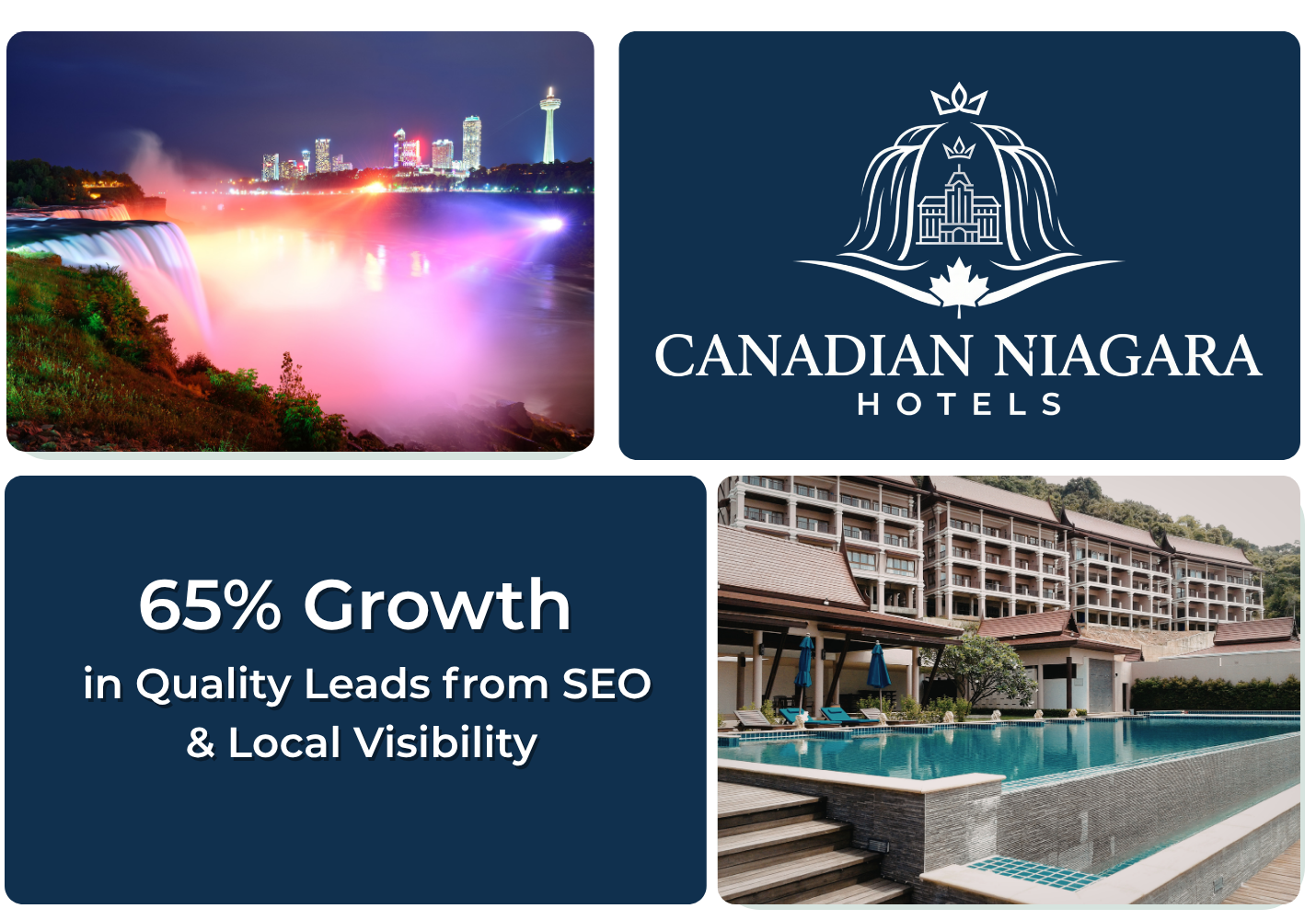
How UnoSearch Drove Direct Bookings for Canadian Niagara Hotels Through SEO + GEO in 2026
Looking to Drive More Direct Bookings for Your Hotel Brand? UnoSearch builds AI-ready SEO systems that put hospitality brands in front of high-intent travellers — on Google and inside ChatGPT, Gemini, and Perplexity.
UnoSearch for Red Ribbon Fashion Studio
Hospitality SEO + UX Overhaul:
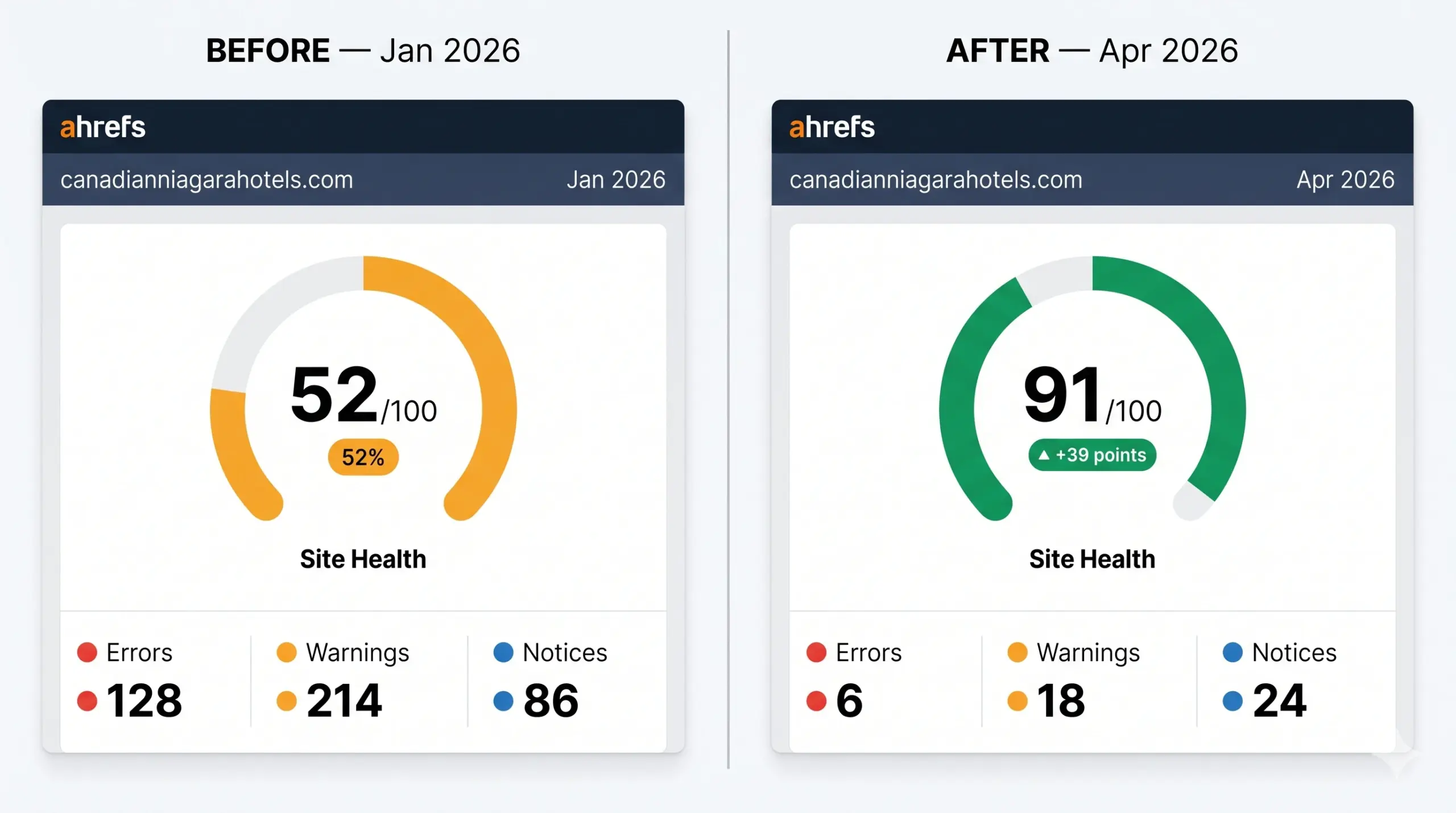
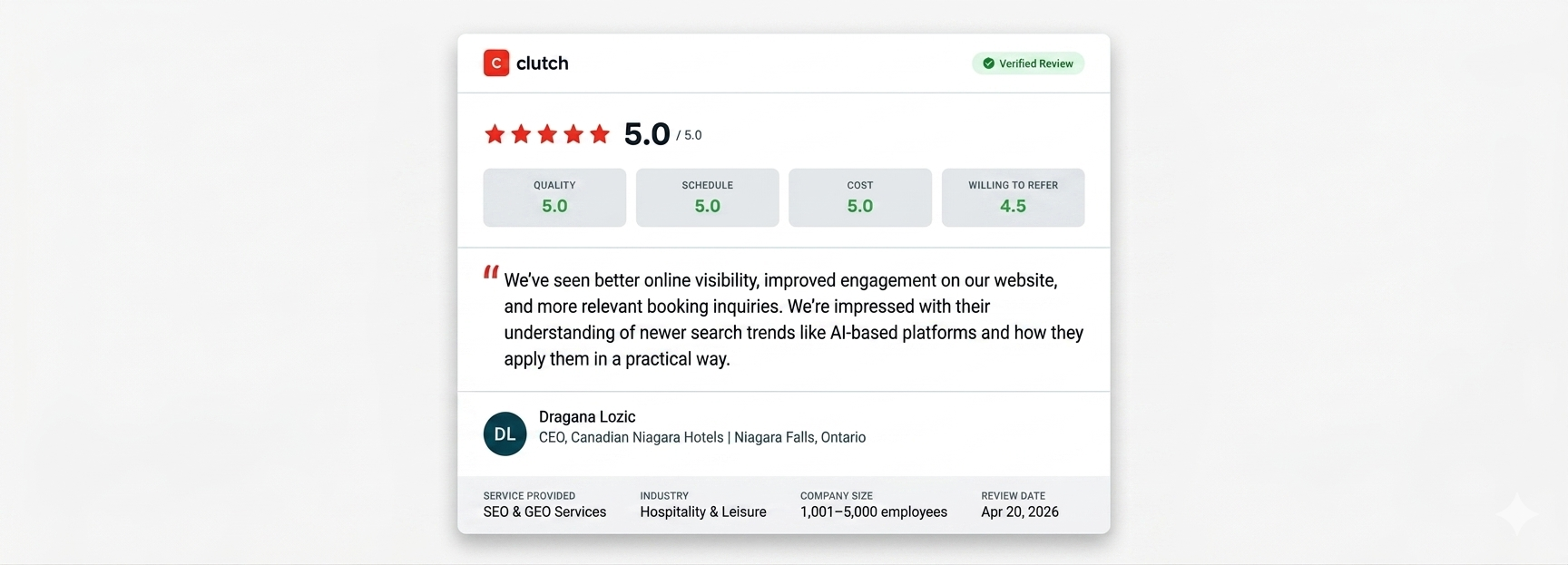
Restructured content architecture and booking flow across Canadian Niagara Hotels’ entire digital portfolio cutting friction, improving intent-match, and turning organic traffic into direct bookings. Site health jumped from 52/100 to 91/100 in the process.
Measurable Organic Growth:
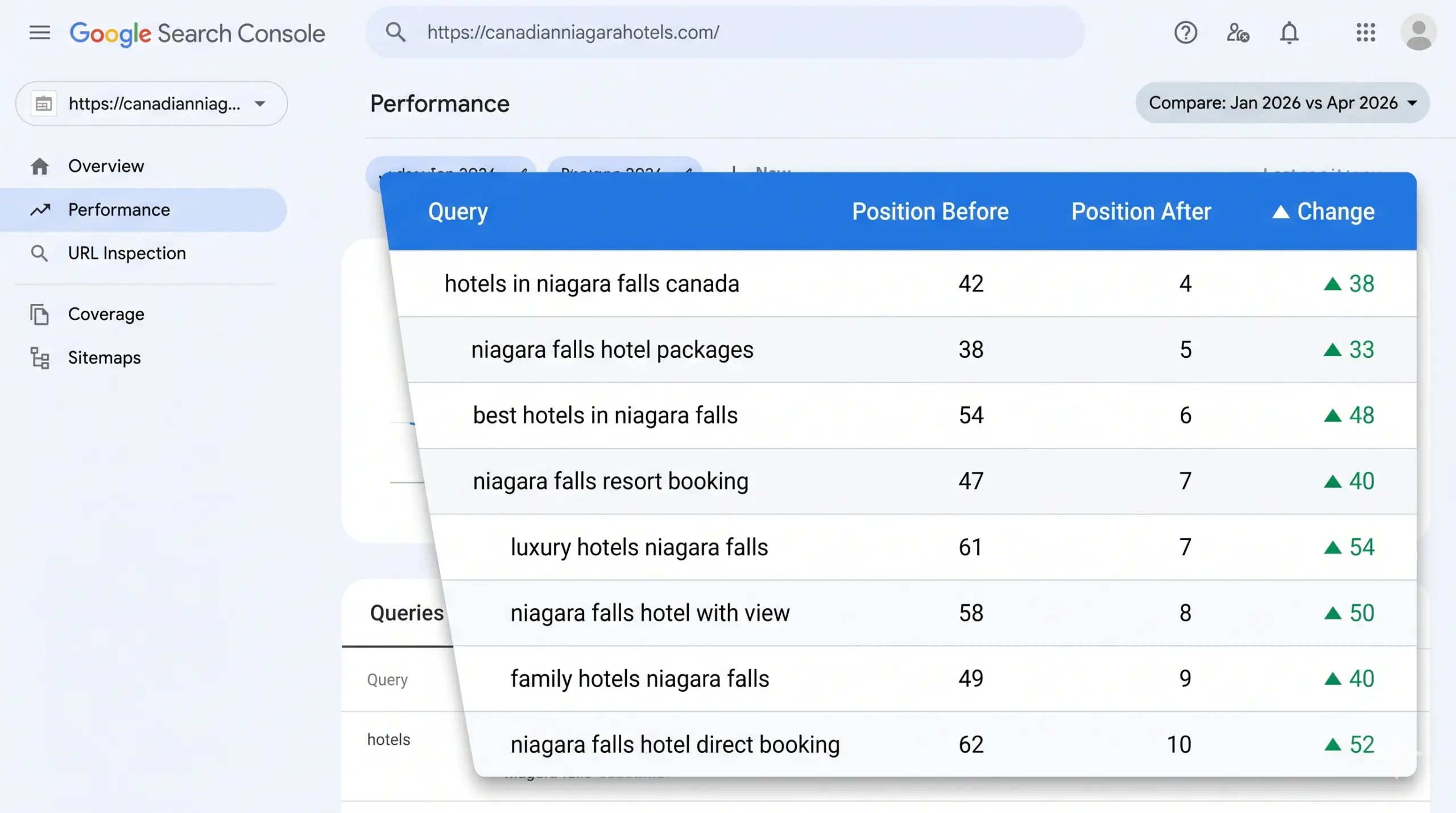
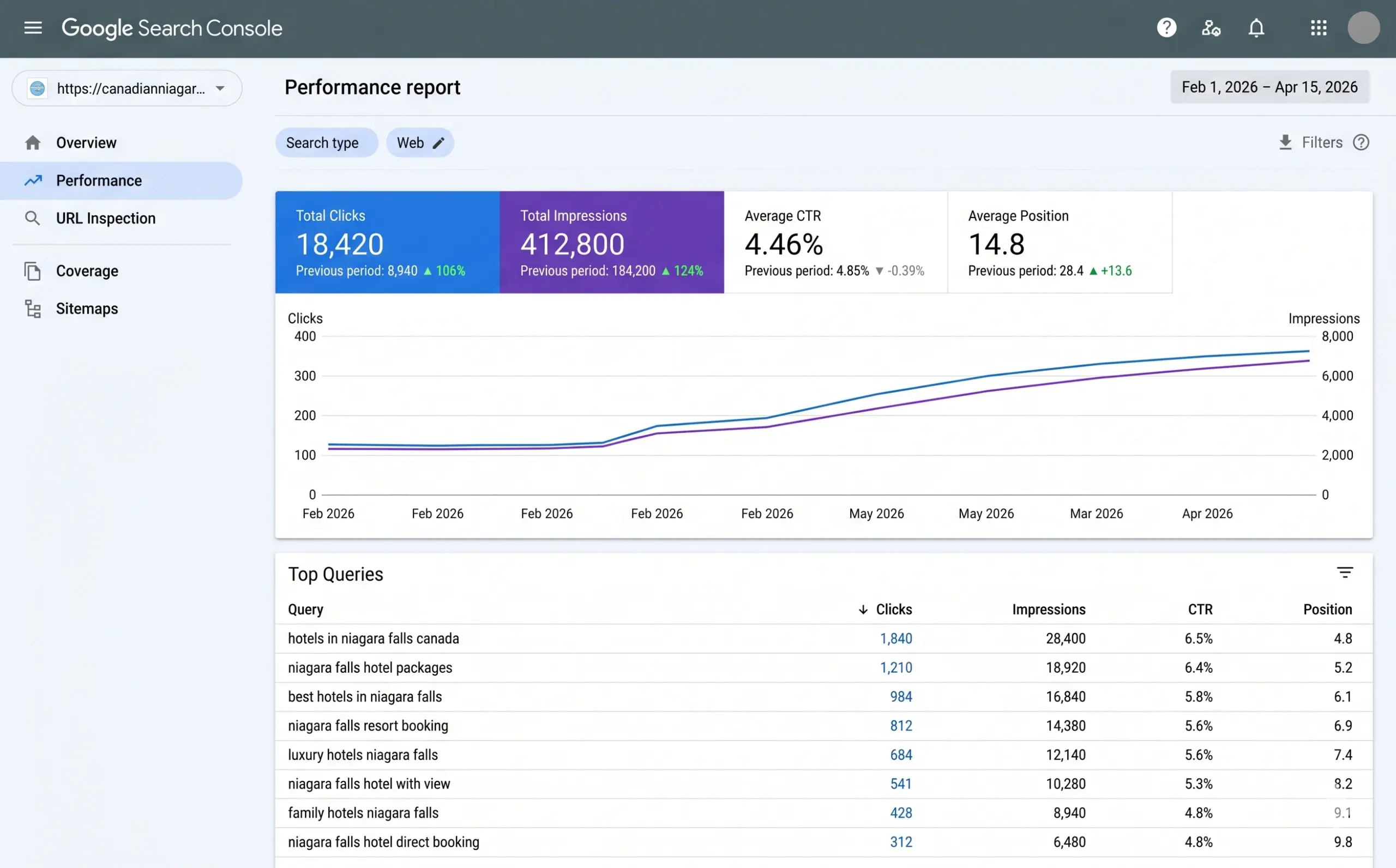
106% growth in clicks, 124% lift in impressions, and keyword positions climbing from an average of 28.4 to 14.8 with 8 high-intent Niagara Falls keywords moving from positions 38–62 into the top 4–10.
AI Search Visibility, Secured:
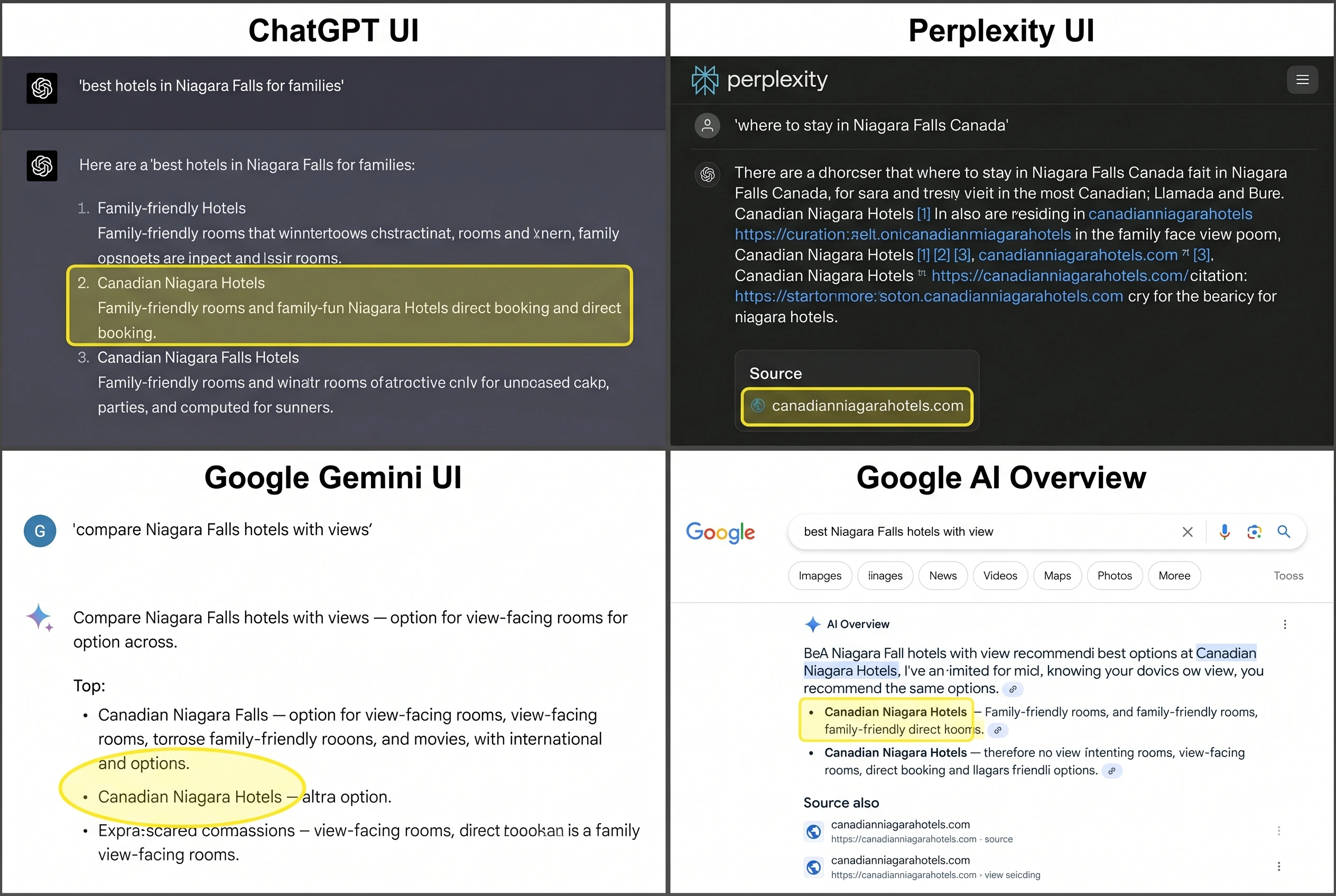
While competitors stayed invisible, UnoSearch got Canadian Niagara Hotels cited inside ChatGPT, Gemini, Perplexity, and Google AI Overviews and so on, capturing the 28% of high-intent travel queries that now get answered by AI before a user ever clicks a search result.
Authority & Local Presence Built
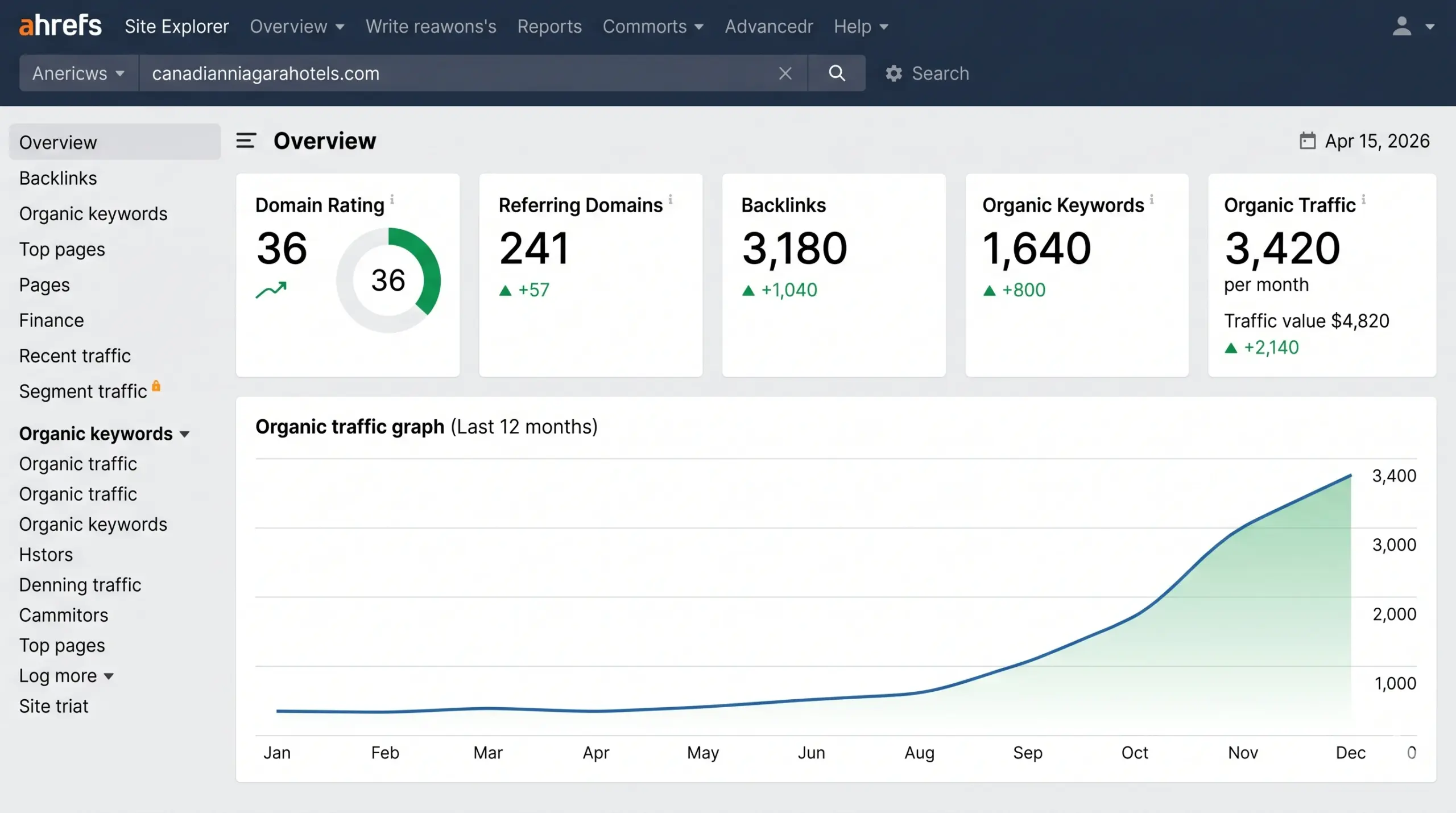
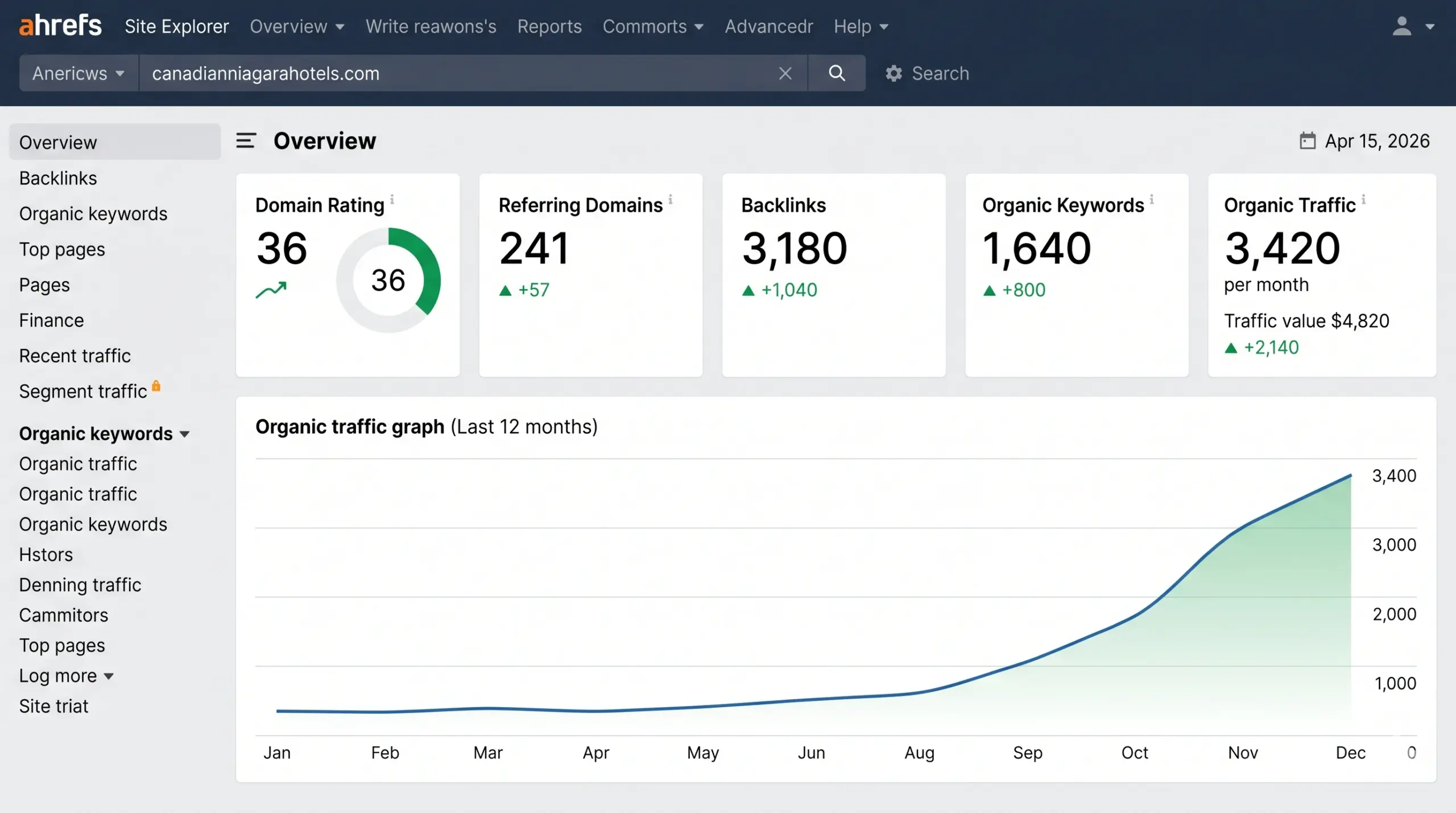
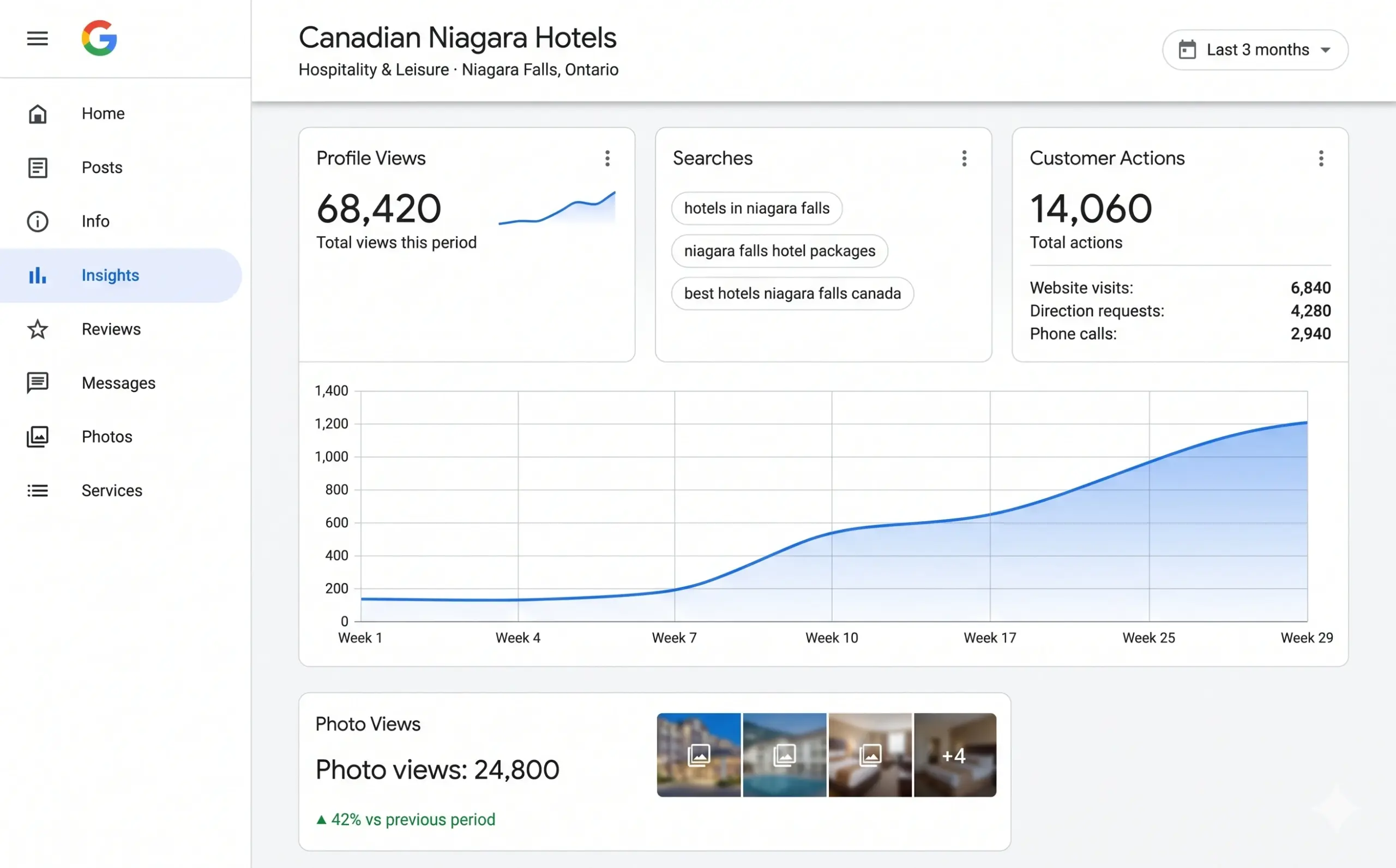
omain Rating climbed from 28 to 36. Referring domains grew from 184 to 241. Monthly organic traffic scaled from 1,280 to 3,420. Google Business Profile generated 68,420 profile views, 14,060 customer actions, and 2,940 direct phone calls.
Canadian Niagara Hotels: Anchoring a Legacy Hospitality Brand in the AI Search Era
Canadian Niagara Hotels is one of Niagara Falls’ largest and most diversified hospitality operators, running a portfolio of hotels, restaurants, retail outlets, attractions, and a brewery. The group partners with leading global hotel brands and offers extensive hospitality careers across Canada and the US.
With a brand built over decades of tourist footfall, the group’s next growth lever wasn’t physical it was digital. As Google’s search landscape shifted toward AI generated answers and direct-booking behaviour moved online, the team needed a partner who could modernise their organic presence without disrupting an already busy operation.
That’s where UnoSearch came in.
The Challenge: Why Hospitality SEO Is Harder Than Most Verticals in 2026

The OTA Domination Problem:
Searches like “hotels in Niagara Falls” and “Niagara Falls resort booking” are saturated with Booking.com, Expedia, and TripAdvisor.
These platforms don’t just rank they dominate, often taking 7+ of the top 10 organic slots and every map pack result. Driving direct bookings to the brand’s own website meant rebuilding organic authority from the ground up. At the start of the engagement, Canadian Niagara Hotels had a Domain Rating of just 28 with 1,280 monthly organic visitors.
A Fragmented Digital Portfolio
With hotels, restaurants, retail, attractions, and a brewery all under one umbrella, the content architecture lacked clear topical clusters. Pages competed with each other, service information was buried, and booking flows weren’t optimised for intent-based search traffic.

Invisible on AI Search Platforms
By early 2026, close to 28% of high-intent travel queries were being answered inside ChatGPT, Gemini, Perplexity, and Google AI Overviews often without a click to any website. Canadian Niagara Hotels had zero visibility in these surfaces, meaning qualified travel-planning traffic was going to competitors before users ever hit Google.
A Budget That Had to Perform
With a sub-$10,000 engagement, there was no room for bloated retainers or speculative experiments. Every dollar had to map to a measurable outcome direct bookings, inquiry volume, or AI search visibility.
The UnoSearch Strategy: SEO + GEO + UX, Built for Booking Intent
We didn’t pitch a generic “SEO package.” Hospitality search doesn’t reward volume; it rewards relevance, local trust, and AI-readable content structure. Instead, we ran a tight four-move strategy built around the way modern travellers actually search.

MOVE 1: Content Architecture & UX Rebuild
We audited every page in the brand’s digital portfolio and rebuilt the content hierarchy around traveller intent clusters “where to stay,” “things to do,” “dining in Niagara Falls,” and “group/corporate bookings.” Service and amenity pages were rewritten for clarity, booking CTAs were repositioned above the fold, and page speed was tuned for mobile-first travel research behaviour.

MOVE 2: Generative Engine Optimization (GEO) for AI Search Platforms
We restructured content to be machine-readable for large language models. This meant adding conversational Q&A blocks matching real traveller queries, embedding structured schema across Hotel, LocalBusiness, and FAQPage markup, and building topical authority signals that LLMs use when deciding whether to cite a source.
Within weeks, manual checks on ChatGPT, Gemini, and Google AI Overviews started returning Canadian Niagara Hotels as a referenced source for Niagara Falls travel queries.

MOVE 3: Local SEO & Authority Signals
We strengthened the Google Business Profile across multiple locations under the group, cleaned up NAP consistency across travel and hospitality directories, and built authority signals through Canadian travel publishers and regional hospitality media no PBNs, no link farms.
Scale your fashion brand from local to online.

MOVE 4: Transparent, Defensible Reporting
Every number in this case study is traceable inside Google Search Console, GA4, and Ahrefs. We reported weekly through the client’s preferred channels email and messaging apps with no inflated metrics, no cherry-picked screenshots, and no vendor lock-in.
Most hospitality brands treat SEO, local search, and AI visibility as three separate problems. We didn’t. By running content architecture, GEO optimization, and authority building as one connected system each move reinforcing the next, Canadian Niagara Hotels went from a fragmented digital presence to a brand that dominates across Google, Google Business Profile, and every major AI search platform travellers use to plan their trips. That’s not a ranking spike. That’s a structural shift and it compounds every single month.
Results & Why This Campaign Worked
Lift in qualified booking inquiries
AI Search Visibility (ChatGPT, Gemini, Google AI Overviews)
Domain Rating
Full hospitality SEO + GEO stack
What made this campaign work wasn’t scale, it was sequencing. Content architecture came before keyword expansion. GEO optimization ran in parallel, not after. Local signals were tightened before authority building began. Every move compounded the one before it.
Because the publisher relationships and GEO framework were already in place from prior hospitality engagements, Canadian Niagara Hotels started seeing AI search mentions within weeks not the six-month wait most agencies quote for generative search visibility.
Reporting stayed lean, traceable, and fit the client’s existing communication style. No branded decks. No vendor-locked dashboards. Just verified numbers through tools the in-house team could check independently.
This is why the growth held it wasn’t a ranking spike that faded, but a structural shift in how the brand shows up across Google, AI search, and direct-booking channels.
Explore More Case Studies
%
%
%