SEO for Lawyers: How to Get Found by Clients on Google
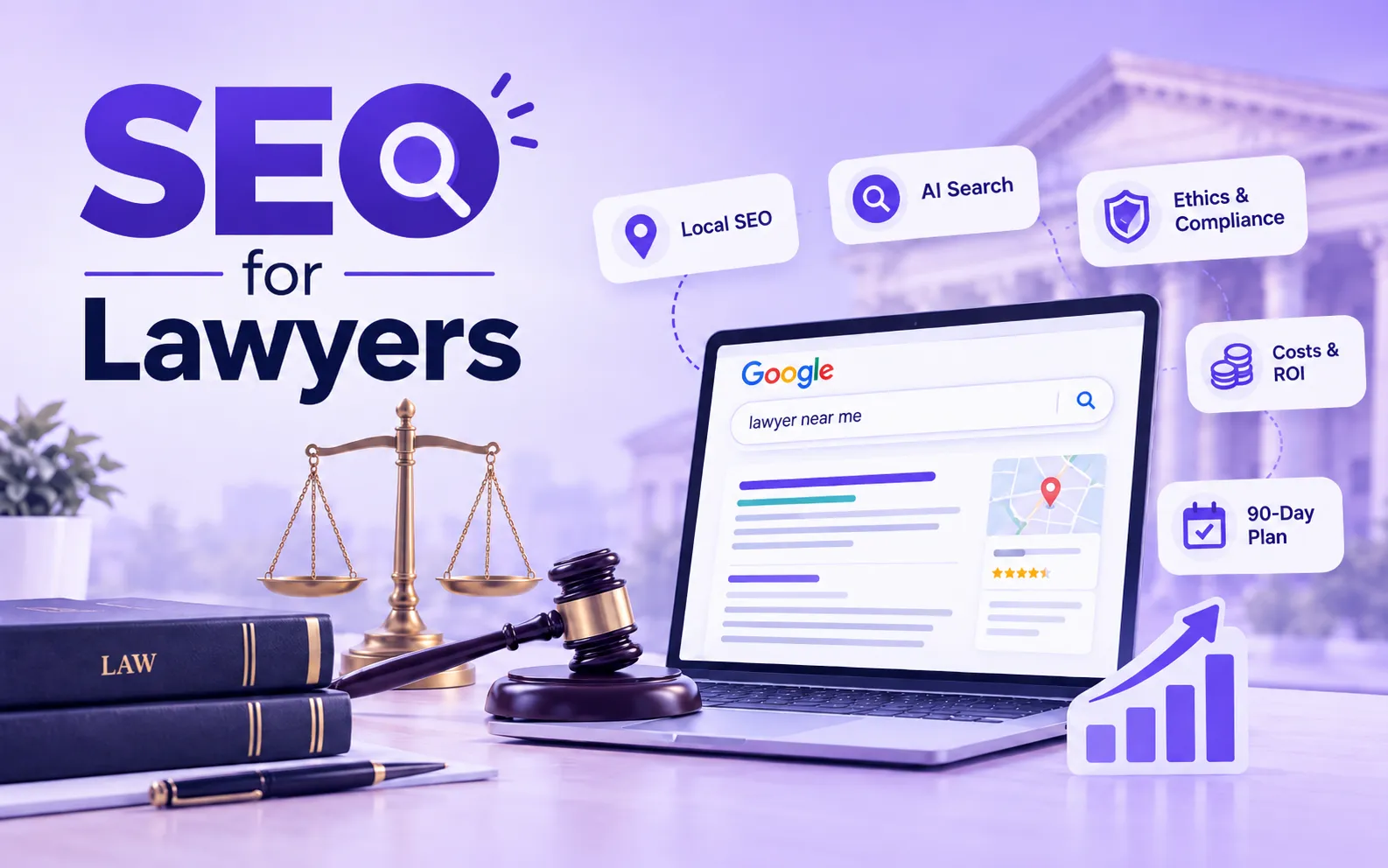
SEO for lawyers is the practice of improving your website so your firm can appear when people search Google for legal help. Most people looking for legal assistance begin their search online, and firms that appear prominently in those results are more likely to receive the first call. This guide explains search engine optimization for lawyers in clear terms, covering local SEO, website improvements, and advertising rules, so you can decide what to handle internally and when to bring in professional support.
Want More Clients to Find Your Law Firm on Google?
UnoSearch builds SEO strategies for law firms that focus on local visibility, practice-area rankings, qualified traffic, and consultation requests—not just rankings and clicks.
Get Your Free SEO Audit2. Why SEO Matters for Law Firms
3. Keywords and Search Intent
4. Practice-Area Pages and Content That Builds Trust
5. Local SEO for Law Firms
6. Website SEO: The Technical Basics
7. Build Links and Follow SEO Rules
8. SEO by Practice Area
9. SEO for AI Search and Google AI Overviews
10. How to Measure SEO and Build a 90-Day Plan
Quick Answer: What Is SEO for Lawyers?
SEO for lawyers means improving your firm’s website, content, and online listings so that Google can find them and show them to people who are searching for legal representation. It relies on helpful content, a well-maintained Google Business Profile, and a fast, mobile-friendly website. It also carries one requirement that most industries do not face, because every claim you publish must comply with your state bar’s advertising rules. SEO does deliver results for law firms, but those results build gradually over several months rather than overnight.
Why SEO Matters for Law Firms

People facing a legal problem usually search online before they speak to anyone, and they often type specific questions such as “divorce lawyer near me” or “what to do after a car accident.” If your firm does not appear in those results, the prospective client will contact a competitor that does.
SEO marketing for attorneys also differs from paid advertising in an important way. Legal keywords are known for expensive advertising costs, and paid traffic disappears as soon as the budget ends, while a well-optimized page can continue attracting qualified clients long after publication. Many firms combine both approaches, using advertising for immediate visibility and SEO for steady, long-term growth.
Legal SEO is also different from optimization for most other industries, for three main reasons:
Local intent.
Most prospective clients want a lawyer in their own city or county, so ranking well nearby matters far more than ranking nationally.
Higher content standards.
Google treats legal advice as a “Your Money or Your Life” topic, which means information that can affect a person’s finances, health, or safety, so thin or generic pages earn less trust.
Advertising rules.
State bars limit what a firm may claim in its marketing, and we explain those limits in detail later in this guide.
EXPERT INSIGHT:
Olha Bodnar, founder of Ethos Leads, a marketing firm that helps law firms grow within professional conduct rules, says lawyers can compete on Google without crossing ethical lines. She writes that “Ethical marketing not only ensures compliance but also builds trust and credibility”. She advises keeping listings accurate, asking for honest reviews from real clients, and using keywords naturally. She also warns firms to avoid unproven claims and promised outcomes.
Source: Attorney at Law Magazine
How Clients Search: Keywords and Intent
Effective optimization begins with understanding the exact terminology that your prospective clients use. Most legal searches include a geographic location or a specific category of case, and a broad phrase such as “personal injury lawyer” attracts intense competition from large firms. A more specific phrase is easier to win and usually reflects a more immediate need.
Broad:
Personal injury lawyer, which is highly competitive and unclear in purpose.
Better:
Car accident lawyer in Austin, which adds both a case type and a location.
More specific:
Motorcycle accident attorney Austin free consultation, which signals that the searcher is ready to act.
You should also consider the motivation behind each individual search. Someone who was arrested an hour ago needs a telephone number and clear instructions immediately, whereas someone comparing family lawyers wants to see experience, reviews, and an explanation of the legal process. A person asking how long a divorce takes needs a helpful, direct answer before anything else.
A practical rule is to send “hire” searches to your practice-area pages and “learn” searches to your blog posts and FAQs. Because people use both words interchangeably, include both “lawyer” and “attorney” in your copy.
Practice-Area Pages and Content That Builds Trust

Every major practice area deserves its own page, because a single page that lists all of your services is too thin to rank well for any of them. A strong practice-area page should include the following elements:
- A plain-language explanation of the legal issue and the type of client you help.
- The locations you serve and the courts or agencies you regularly work with.
- A step-by-step description of how the legal process usually works.
- Direct answers to the questions that clients ask most often.
- A link to the attorney who handles these matters, with credentials.
- A clear call to action, such as a visible phone number and a short contact form.
Supporting each page with helpful articles strengthens the whole topic. A family law page, for example, can link to articles about custody modifications, mediation compared with court, and typical divorce timelines, and these connections show Google that your website covers the subject in real depth.
Show real experience and expertise
Google evaluates legal content for experience, expertise, authority, and trustworthiness. Lawyers can demonstrate these signals in practical ways:
- Add a byline to every article.
- List bar admissions and relevant case experience in attorney biographies.
- Have a licensed attorney write or review each page.
- Update pages whenever the law changes.
- Avoid publishing generic text that no attorney has verified.
Before and after: a simple example
Small changes to a page can make its purpose obvious to both readers and search engines, and the example below uses a fictional firm to show the difference.
| Element | Weak version | Stronger version |
|---|---|---|
| Title tag | Weak versionHome | Smith & Lee LLP | Stronger versionCar Accident Lawyer in Austin, TX | Smith & Lee |
| Meta description | Weak versionWe are a full-service law firm with experienced attorneys. | Stronger versionHurt in a car accident in Austin? Learn your options and talk to our attorneys about your case. Call for a free consultation. |
| Page opening | Weak versionOur firm has decades of combined experience serving clients. | Stronger versionIf you were hurt in a car crash in Austin, here is what to do in the first 48 hours and how a lawyer can help. |
Local SEO for Law Firms
For most firms, local SEO for law firms produces the largest share of phone calls. When someone searches for a family lawyer near them, Google frequently displays a map with three business listings above the regular results, which is known as the local pack. According to Google, local rankings depend primarily on relevance, distance, and prominence, meaning how closely you match the search, how near you are to the searcher, and how well known your firm is.
Set up your Google Business Profile
- Claim and verify your profile so that you maintain control over the information Google displays about your practice.
- Choose the most precise primary category, such as “Personal Injury Attorney,” instead of the generic “Lawyer” label.
- Enter your real office address, current business hours, and primary telephone number.
- List your services and upload current photographs of your office and team.
- Publish updates and respond to client questions on a consistent schedule.
Keep your name, address, and phone number consistent
This information is often abbreviated as NAP. Your firm’s name, address, and phone number should be identical on your website, your Google profile, and directories such as Avvo, Justia, FindLaw, and Martindale-Hubbell, because even a small difference like “St.” versus “Street” can create a mismatch that weakens trust signals.
Ask for reviews the right way
Client reviews strongly influence which lawyer a person chooses. Ask satisfied clients for honest feedback, but never pay for reviews or offer rewards in exchange for positive testimonials. When you respond to a review, avoid sharing any client information and do not confirm that the reviewer was a client.
Build real location pages
If your firm operates more than one office, give each location its own page with the office address, directions, the attorneys who work there, and reviews or results from that community. Copying a single page and changing the city name is not enough to satisfy either visitors or Google.
Law Firm Website SEO: The Technical Basics
Law firm website SEO ensures that Google can find, understand, and trust your pages, and you do not need a developer to cover the essential steps.
Mobile first:
Google primarily evaluates the mobile version of your website, so test your most important pages on a phone.
Speed:
Someone dealing with a legal emergency will not wait for a slow page, and free tools such as PageSpeed Insights and Google Search Console can show you where to improve.
Clear navigation:
Use simple menus and link frequently between related pages so that visitors and search engines can follow your content.
Page details:
Maintain title tags between 55 and 65 characters, limit meta descriptions to approximately 155 characters, use short descriptive URLs, and add alternative text to every image.
Schema markup:
This code tells Google what a page is about, and the most useful types for law firms are Attorney, LegalService, and LocalBusiness.
Security:
Use HTTPS and repair broken links promptly.
Build Links the Right Way
Backlinks are links from other websites to yours, and Google treats them as signals of trust. A single link from a relevant and respected source is worth more than dozens of links from weak or unrelated sites. Strong sources for a law firm include:
- Bar associations and local professional organizations in your community.
- Local news outlets, when you provide expert commentary on a story.
- Legal publications that accept guest articles from practicing attorneys.
- Law school websites and community events in which your firm participates.
- Reputable legal directories that verify the accuracy of their listings.
You should avoid link schemes, paid link networks, and bulk directory submissions, because Google can ignore these tactics and they may harm your site. Advice about directories can seem contradictory, but the simple approach is to use a few trusted legal directories to keep your information consistent and to skip the rest.
SEO Rules Every Lawyer Should Know
Most SEO guides skip this topic, yet lawyers must follow advertising rules that other businesses do not face. The ABA Model Rules, including Rule 7.1, prohibit false or misleading statements about a lawyer’s services, and each state adopts its own version, so you should confirm the rules in your jurisdiction. An SEO provider who does not understand these requirements can expose your firm to compliance problems.
| Do | Avoid |
|---|---|
| Use your real office address and hours. | AvoidListing virtual offices as real offices. |
| State the places where you are licensed to practice. | AvoidImplying you can handle cases in states where you are not licensed. |
| Use accurate practice areas. | AvoidClaims you cannot prove, such as "best lawyer in town." |
| Add a note that past results do not guarantee future outcomes. | AvoidPromising a result or quoting a "success rate" without proof. |
| Ask real clients for honest reviews. | AvoidFake reviews, or rewards for positive ones. |
| Reply to reviews without sharing client details. | AvoidConfirming a client relationship or discussing a case in public. |
| Use your official firm name on your profiles. | AvoidAdding keywords to your Google profile name that are not part of your firm name. |
SEO for AI Search and Google AI Overviews

A growing number of people now receive quick answers from AI summaries in Google and from chat tools before they ever click a website. If your firm is not cited in those answers, you may be invisible for those searches. Nobody controls what AI tools display, but the habits that help you rank on Google also improve your chances of being cited.
- Place a short, direct answer immediately beneath each question heading.
- Write headings that closely match the way people naturally phrase their questions.
- Add an FAQ section with matching schema markup.
- Display real authors alongside verifiable professional credentials.
- Maintain current information and keep your firm details identical across every professional listing.
As a simple test, ask an AI tool a question your clients often ask and see whether your firm appears, then repeat the test every few months.
Turn Visitors Into Clients
Rankings matter only when visitors actually contact your firm, so small improvements to your website can produce a significant difference in overall results:
- Display your phone number at the top of every page and add a click-to-call button for mobile visitors.
- Maintain short contact forms that visitors can complete in under a minute.
- Explain what happens after someone reaches out, so that the next step feels clear and low-risk.
- Respond quickly to new inquiries, and provide an after-hours option such as an answering service or live chat.
- Track calls and form submissions so that you know which pages produce real cases.
How to Measure Your SEO Results
Traffic and rankings are early indicators, while leads and signed cases are the results that ultimately matter, so you should track both.
| What to track | Why it matters | Where to find it |
|---|---|---|
| Organic visits | Why it mattersShows if more people find you on Google. | Where to find itGoogle Analytics, Google Search Console |
| Keyword rankings | Why it mattersShows progress on your main terms. | Where to find itGoogle Search Console or a rank tracker |
| Profile views, calls, and directions | Why it mattersShows local search results. | Where to find itGoogle Business Profile |
| Calls and form fills | Why it mattersShows how many visitors reach out. | Where to find itCall tracking and form tracking |
| Consultations and signed cases | Why it mattersShows the business result. | Where to find itYour intake system or CRM |
Should Law Firms Handle SEO In-House or Hire an Agency?
You have two realistic options, which are to handle SEO yourself or to hire professional help, and each approach can work in the right situation.
In House SEO:
Fits a firm with one office, a limited number of practice areas, and a less competitive market. A well-maintained Google profile, a few strong practice pages, and a simple tracking tool can cover most of the essential work.
Professional SEO services:
It can be a better fit for firms with multiple offices, competitive practice areas, or limited internal time. SEO services for lawyers can save considerable effort, but they work best when the provider understands legal marketing and bar advertising rules.
What Should Law Firms Know Before Hiring an SEO Agency?
What does it cost?
Published estimates vary considerably. Solo lawyers in less competitive markets are often quoted roughly $1,000 to $3,000 per month, boutique firms are often quoted $4,000 to $10,000, and larger firms typically pay more. Your city, practice area, and the scope of work all influence the price, so treat these figures as rough ranges and request a written scope of services.
How long does it take?
Numerous sources report that early movement can appear within a few months, while substantial traffic and lead growth often requires six to twelve months, and highly competitive markets can take considerably longer. Google’s own guidance is direct about promises, stating that “No one can guarantee a #1 ranking on Google.”
Red flags when hiring
- Any guarantee of specific rankings.
- A provider who refuses to explain what they will do.
- Reports that focus on traffic and never mention calls or signed cases.
- A contract that locks you into a website platform that you cannot easily leave.
- No experience with law firms or attorney advertising rules.
- Paid links or bulk directory submissions.
Questions to ask before you sign
- Have you worked with law firms similar to mine, and can you share references?
- How do you make sure your work complies with bar advertising rules?
- What will you accomplish during the first 90 days?
- How will you report calls, consultations, and signed cases?
Your 90-Day SEO Plan for Lawyers
SEO is a long-term investment, but a simple plan can help you start with confidence, and you should expect to spend a few hours each week if you manage it yourself.
| Timeline | What to do |
|---|---|
| Days 1 to 30: Foundation | What to doClaim and fix your Google Business Profile. Make your name, address, and phone number match everywhere. Check mobile speed and set up Google Search Console. Pick one or two practice areas and cities to focus on. Review your current pages. |
| Days 31 to 60: Build | What to doWrite or rewrite your key practice-area pages. Add attorney bios with credentials. Add FAQs. Publish your first two helpful posts. Start asking clients for honest reviews. |
| Days 61 to 90: Grow | What to doAdd internal links between related pages. Build location pages if you have more than one office. Start link outreach to local news and your bar association. Set up call tracking and review your first report. |
Watch: How UnoSearch's SEO Service Helped a Client Grow
Guides and checklists can only tell you so much, and the real test of any SEO plan is what it does for a business. In the video below, one of our clients explains how working with UnoSearch on SEO helped him grow his business, from the problems he faced at the start to the results he sees today.
How Can UnoSearch Support Your Law Firm's SEO Goals?
SEO works best as part of a full growth strategy, not as a task that runs on its own. UnoSearch can help build that strategy around your firm’s goals, practice areas, and target clients.
Turn Google searches into qualified inquiries
Want more of the right clients to find your firm when they search for legal help? UnoSearch’s SEO Services build and manage SEO campaigns focused on qualified traffic, calls, and consultation requests, not just rankings and clicks.
Get your firm cited in AI-driven search results
Wondering whether your firm shows up when people ask AI tools for a lawyer? UnoSearch’s GEO Services help your content and brand appear in AI-generated answers, so prospective clients can find you where they now search.
Build an AI-ready SEO foundation for long-term growth
Looking for a strategy that keeps working as search keeps changing? UnoSearch’s AI SEO Services combine search optimization with AI-search best practices, helping law firms build lasting visibility and long-term lead generation.
Final Thought:
SEO for lawyers is not about tricks or shortcuts. It is about making your firm easy to find, easy to trust, and easy to contact, while respecting the rules of your profession. Start with a few focused improvements, such as fixing your Google Business Profile, strengthening your most important practice page, and setting up call tracking, and then continue building one helpful page at a time.
Frequently Asked Questions About GEO Audits
What is SEO for lawyers?
SEO for lawyers is the work of helping your law firm’s website appear on Google when people search for legal help. It combines helpful content, local SEO, and a fast, clear website, and it must follow the advertising rules set by your state bar.
How much does SEO cost for a law firm?
The cost depends on your market and the scope of work. Published estimates range from about $1,000 per month for solo lawyers in less competitive areas to $10,000 or more in competitive cities, so you should request a written scope and clear reporting from any provider.
How long does SEO take for a law firm?
Early movement can appear within a few months, while stronger results often take six to twelve months, and competitive markets can take longer. You should be cautious about anyone who promises a fixed date or a guaranteed position.
Can a law firm do SEO without an agency?
Yes, in many situations, because a firm with one office and a narrow set of services can handle the basics internally, although firms with several offices or heavy competition often gain more from expert support.
What is local SEO for law firms?
Local SEO helps your firm appear when people search for a lawyer in your area. It centers on your Google Business Profile, consistent contact information, client reviews, and pages built for each location that you serve.
Is SEO better than Google Ads for lawyers?
SEO and Google Ads serve different purposes: Google Ads provides immediate visibility but stops when you stop paying, whereas SEO grows more slowly and can continue attracting visitors over time. Many law firms use both approaches to balance immediate visibility with long-term organic growth.
References
1. Attorney at Law Magazine:
https://attorneyatlawmagazine.com/legal-marketing/seo/at-the-intersection-of-ethics-and-local-seo-winning-local-clients-without-crossing-the-line
2. Google Search Central
https://developers.google.com/search/docs/fundamentals/do-i-need-seo
3. Google Business Profile Help
https://support.google.com/business/answer/7091
Continue Learning About Digital Marketing

PPC for E-Commerce: A Profit-First Guide to Paid Ads That Pay Off
Every click on your ad costs money. So the goal is not more clicks. The goal is clicks that turn into profit. PPC for e-commerce puts your products in front of shoppers who are ready to buy. Done well, e-commerce pay per click brings fast, measurable sales. Done...
PPC for Lawyers: Guide to Paid Search & Case Acquisition
Legal searches often happen when a person has a specific problem and wants help. They may be looking for a personal injury lawyer, criminal defense attorney, divorce lawyer, or another specialist. Paid search can put a law firm in front of that demand at the right...

Social Media Marketing for Law Firms: Full 2026 Guide
Social media marketing for law firms means using platforms like LinkedIn, Facebook, and Instagram to build trust with future clients before they ever call your office. A strong social presence helps a firm stay visible, answer common legal questions, and turn casual...


Premier partner


3rd Floor, Niharika Mirage, Kharghar, Navi Mumbai, India
8500 N Stemmons Fwy #5080, Dallas, TX 75247, USA
Services
SEO
Local SEO
Ecommerce SEO
SEO Audit
Enterprise SEO
AI SEO Services
About
Case Study
Testimonials
Contact
Pricing
Press Release
Copyright © Digicore Technologies Pvt. Ltd. All Rights Reserved | Privacy Policy
ROI Driven SEO Company in India

10+ Years of Expertise
Proven track record in delivering SEO and digital marketing solutions across industries.

AI-Powered Solutions
Blending human expertise with AI-driven insights for faster growth and higher ROI.

Revenue Achieved Across 60+ Industries
Driving measurable business impact with strategies tailored to diverse sectors.