
Social Media Marketing for Real Estate: A Complete Guide
Buying or selling a property is rarely an instant decision. Potential clients often spend weeks or months researching locations, comparing properties, following market trends, and looking for professionals they can trust. That makes social media marketing for real estate more than a channel for posting listings. When planned strategically, it can help real estate businesses build visibility, demonstrate expertise, start conversations, capture leads, and nurture potential clients until they are ready to take action.
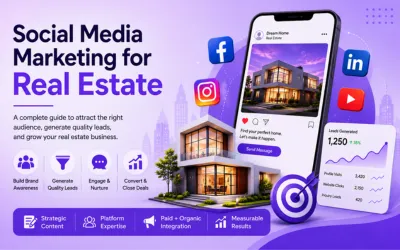
UnoSearch builds social media strategies for real estate brands that focus on local reach, property visibility, qualified leads, and consistent enquiries not just likes and followers.

Pankaj Shrivastava
CEO & Co-Founder, UnoSearch
Pankaj Shrivastava is the CEO and Co-Founder of UnoSearch, leading the company’s strategic direction, business growth, and digital marketing initiatives.
Read more..
With extensive experience in SEO and digital marketing, he focuses on helping businesses strengthen their online presence, drive sustainable growth, and adapt to the evolving digital landscape. His expertise spans business strategy, search engine optimization, AI-driven marketing, and performance-focused growth solutions.
10+ Years
of Expertise
60+
Industries Served
AI-First
Digital Growth Strategy
1. What Is Real Estate Social Media?
2. Build a Social Media Plan
3. Best Social Media Platforms
4. What to Post
5. Generate More Leads
6. Organic vs. Paid Social
7. Calculating ROI
8. 90-Day Plan
Quick Answer: What Is Social Media Marketing for Real Estate?
Audience targeting
Content and authority building
Lead generation
For social media marketing for real estate agents, the ultimate objective should be to turn visibility and engagement into meaningful conversations and qualified business opportunities.
Expert Insight: Why Educational Content Can Outperform Listing-Only Posts
“Real estate businesses should not treat social media as just a place to post listings. The content needs to provide ongoing value to the audience through useful information, insights, and resources that help potential clients.”
— Jenn Herman, Social Media Expert and Founder of Jenn’s Trends : https://www.nar.realtor/news/broker-news/back-to-basics-social-media-marketing-for-your-brokerage
Social Media Marketing for US Real Estate Businesses: Importance & Benefits
Social media marketing is important for US real estate businesses because it helps agents, brokers, developers, and real estate teams build visibility, connect with local buyers and sellers, and generate qualified leads. A targeted strategy across platforms such as Instagram, Facebook, YouTube, TikTok, and LinkedIn can promote property listings, showcase neighborhoods, share market insights, and establish local expertise. By reaching audiences based on location, property interests, and buying or selling intent, real estate businesses can strengthen their online presence, build trust with potential clients, and create more opportunities for inquiries and conversions.
How Do You Build a Social Media Strategy for a Real Estate Business?
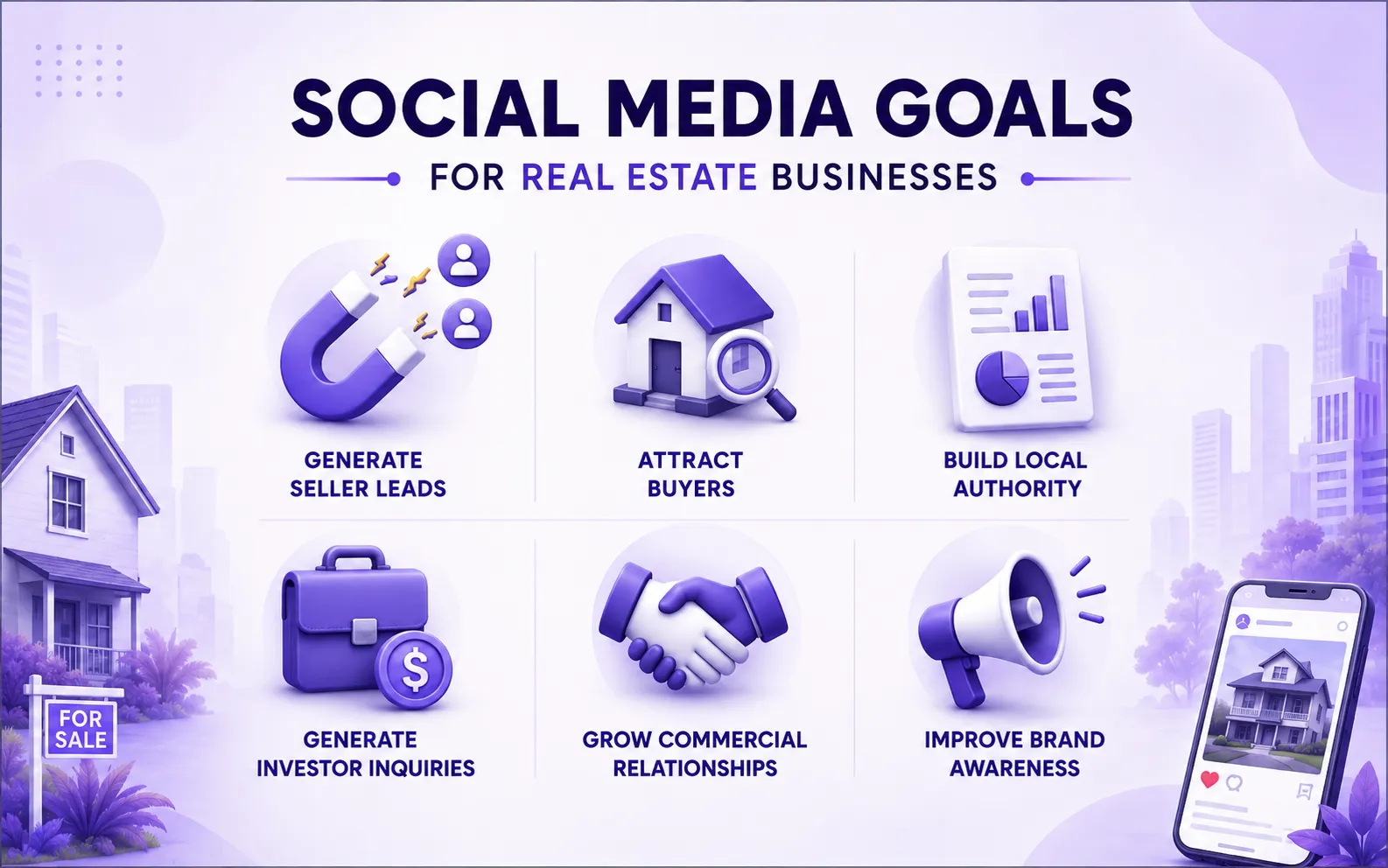
A successful strategy starts before you choose platforms or create a content calendar. First, decide exactly what you want social media to achieve.
| Business Goal | Social Media Objective | Example CTA |
|---|---|---|
| Business Goal: Generate seller leads | Social Media ObjectiveBuild trust with homeowners | Example CTAGet a property valuation |
| Business Goal: Attract buyers | Social Media ObjectiveIncrease property and market visibility | Example CTAGet property alerts |
| Business Goal: Build local authority | Social Media ObjectiveEducate a specific market | Example CTADownload the market report |
| Business Goal: Generate investor inquiries | Social Media ObjectiveShare investment insights | Example CTABook an investment consultation |
| Business Goal: Grow commercial relationships | Social Media ObjectiveBuild professional credibility | Example CTAStart a conversation |
| Business Goal: Improve brand awareness | Social Media ObjectiveIncrease relevant reach | Example CTAFollow for market insights |
Which Social Media Platforms Work Best for Real Estate Marketing?
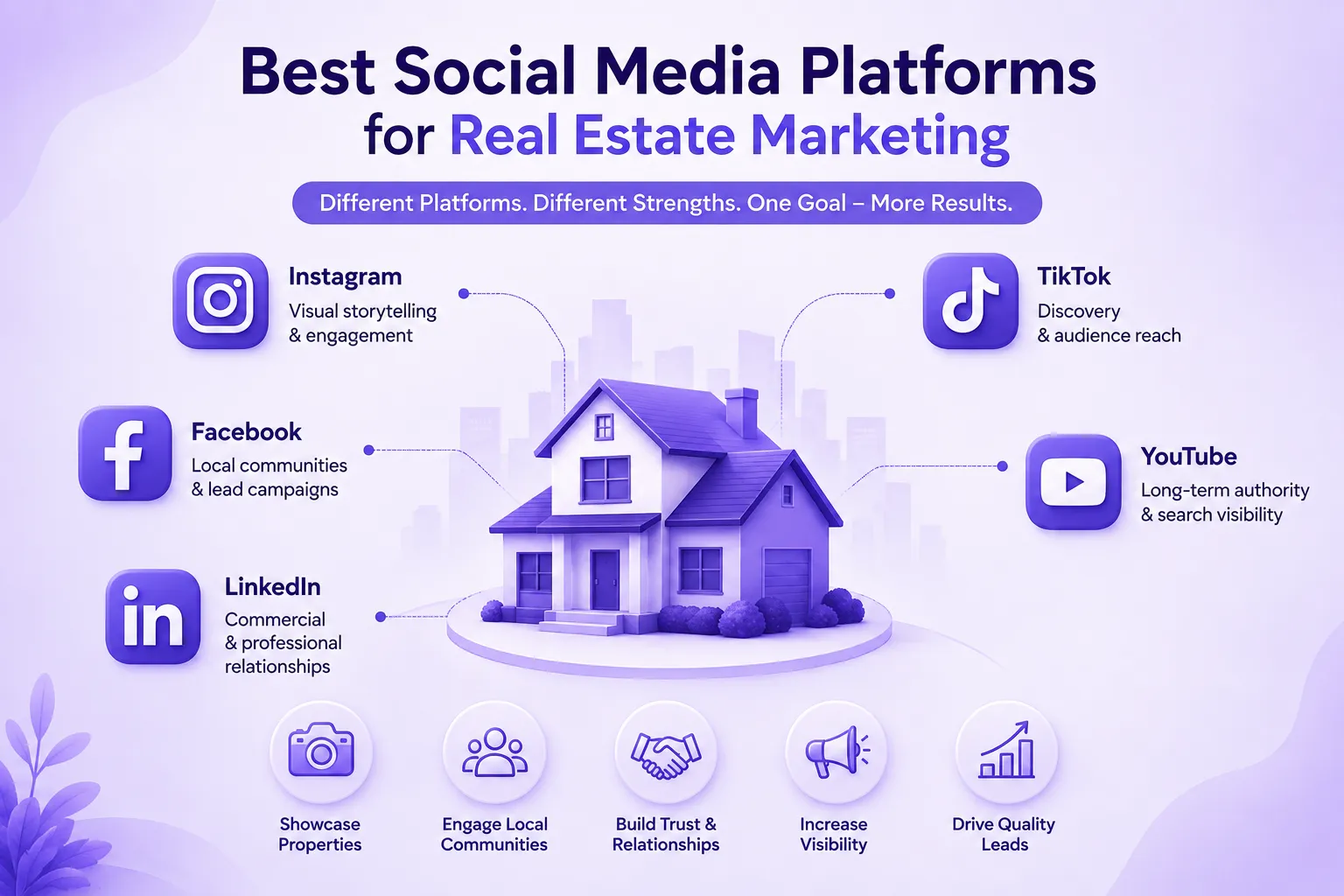
There is no single platform that works best for every real estate business. The right platform depends on your audience, business model, content resources, and overall objective.
| Platform | Best Use for Real Estate | Suitable Content |
|---|---|---|
| Visual storytelling and engagement | Reels, carousels, property stories | |
| Local communities and lead campaigns | Community content, events, campaigns | |
| Commercial and professional relationships | Market insights, B2B content | |
| TikTok | Discovery and audience reach | Short educational videos |
| YouTube | Long-term authority and search visibility | Area guides, tours, market explainers |
Instagram for Visual Property and Local Content
Instagram can work well for showcasing properties, neighborhoods, client stories, and short educational videos. However, the content should not consist entirely of listings. Market tips, neighborhood insights, and buyer or seller education can help create a more balanced presence.
Facebook for Community and Lead Generation
Facebook can support local visibility, community engagement, events, and paid campaigns. It can be particularly useful when a business wants to combine organic content with targeted lead-generation campaig
LinkedIn for Commercial and Professional Relationships
LinkedIn can be valuable for commercial real estate businesses, developers, investors, and professionals looking to build industry relationships. The content should focus more heavily on insights, trends, market analysis, and professional expertise.
YouTube for Long-Term Authority
What Should Real Estate Agents Post on Social Media Besides Listings?
Property listings should remain part of your content strategy, but they should not be the entire strategy. A potential client may not need a property today, but they may still follow an agent who regularly provides useful market information. A strong social media marketing for real estate strategy can be built around several content themes.
Property Storytelling
Instead of simply uploading property images, explain the story behind the property. Discuss who it may be suitable for, what makes the location valuable, and what potential buyers should know before arranging a viewing. This creates more context than a standard listing post.
Local and Neighborhood Expertise
Local knowledge can help differentiate a real estate professional from competitors. Content can focus on neighborhood developments, infrastructure, amenities, lifestyle factors, and changes that may influence buying or selling decisions.
Market Education
Educational content helps answer questions prospects may already be researching. Topics can include property pricing, market trends, inventory, financing considerations, buying mistakes, or selling decisions. This type of content is particularly valuable because it can position your business as a useful source of information before the prospect is ready to transact.
Client Stories and Social Proof
Testimonials and transaction stories can help prospects understand how you work. Instead of simply stating that you provide excellent service, show examples of the challenges clients faced and how your business helped them move forward.
Behind-the-Scenes Content
Real estate transactions involve much more than showing a property. Content can demonstrate the work involved in preparation, research, inspections, negotiations, and other activities that help clients understand the value of working with a professional.
Expert Opinions and Personal Branding
People often remember individuals and businesses with a clear point of view. Sharing informed perspectives on relevant market developments can make your content more recognizable and help build trust over time.
Conversion-Focused Content
Some content should create a direct next step. This could involve a market report, property alert, seller guide, investment checklist, or consultation. The key is ensuring that the offer is relevant to the content the user has already engaged with.
How Do You Turn Social Media Engagement Into Real Estate Leads?
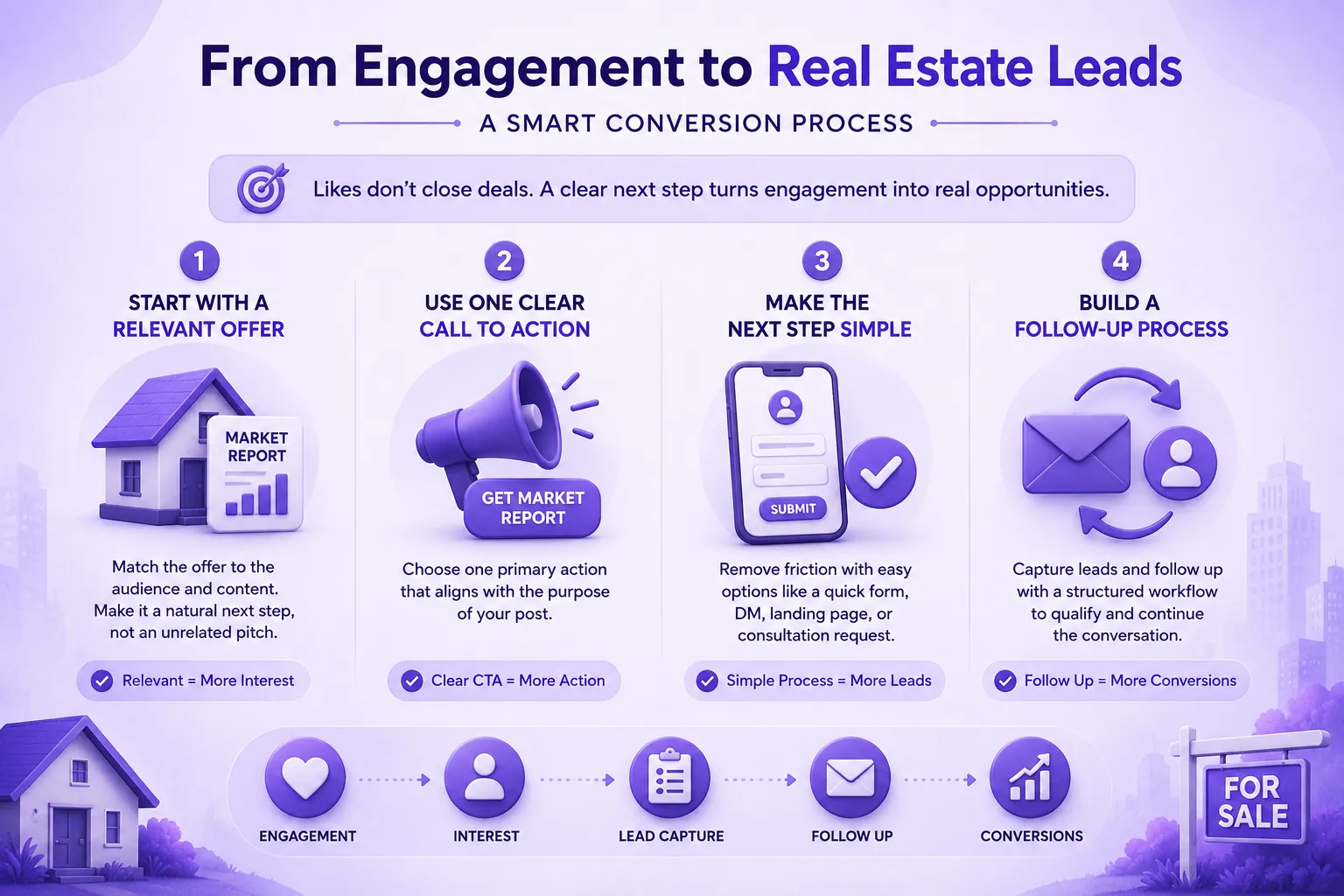
Engagement alone does not create a sales pipeline. A post may receive hundreds of likes but generate no qualified conversations if there is no clear path for an interested person to take the next step. A strong real estate social marketing strategy needs a conversion process.
Start With a Relevant Offer
The offer should match the audience and the content. For example, someone engaging with content about property prices may be interested in a local market report. A homeowner engaging with selling advice may be more interested in a property valuation. The offer should feel like a natural continuation of the content rather than an unrelated sales pitch.
Use One Clear Call to Action
A post should not ask users to follow, comment, visit a website, call, email, and book a consultation at the same time. Choose the action that is most relevant to the purpose of that post. A clear CTA makes it easier for the audience to understand what to do next.
Make the Next Step Simple
A complicated form or multi-step process can create unnecessary friction. Depending on the campaign, the next step could be a direct message, a short lead form, a landing page, or a consultation request. The easier the process is, the more likely an interested user is to continue the journey.
Build a Follow-Up Process
Capturing a lead is only one part of the process. The lead should move into a structured follow-up workflow where the business can qualify the inquiry and continue the conversation. Without this stage, even strong social media marketing for real estate agents campaigns can struggle to produce measurable results.
Matching the tier to your actual stage, rather than your ambition, is the single biggest lever for avoiding both overpaying and underpaying.
What Is the Best Social Media Lead Generation Strategy for Real Estate?
The most effective strategy connects content creation with lead generation instead of treating them as separate activities. A simple framework looks like this:
| Stage | Purpose | Example |
|---|---|---|
| Attract | Reach relevant prospects | Educational market content |
| Engage | Build interaction and trust | Questions, videos, discussions |
| Capture | Collect intent or contact details | Guide, report, valuation |
| Nurture | Stay connected | Follow-up and retargeting |
| Convert | Create a business opportunity | Consultation or property viewing |
Should Real Estate Businesses Use Organic Social Media or Paid Ads?
Organic and paid social media can serve different purposes, and the strongest strategy often combines both.
Organic content gives businesses an opportunity to demonstrate expertise, test different topics, and build familiarity with their audience. It can also help identify the subjects and formats that naturally generate stronger engagement.
Paid campaigns can help businesses reach specific audiences, promote targeted offers, retarget interested users, and generate leads more predictably. However, paid advertising works best when the offer and conversion process are already clear.
One effective approach is to identify organic content that already resonates with your audience. A successful educational video, client story, or market insight can then provide useful direction for paid campaign testing. This creates a stronger connection between organic social media marketing for real estate and paid lead-generation activity.
How Do You Measure ROI From Social Media Marketing for Real Estate?
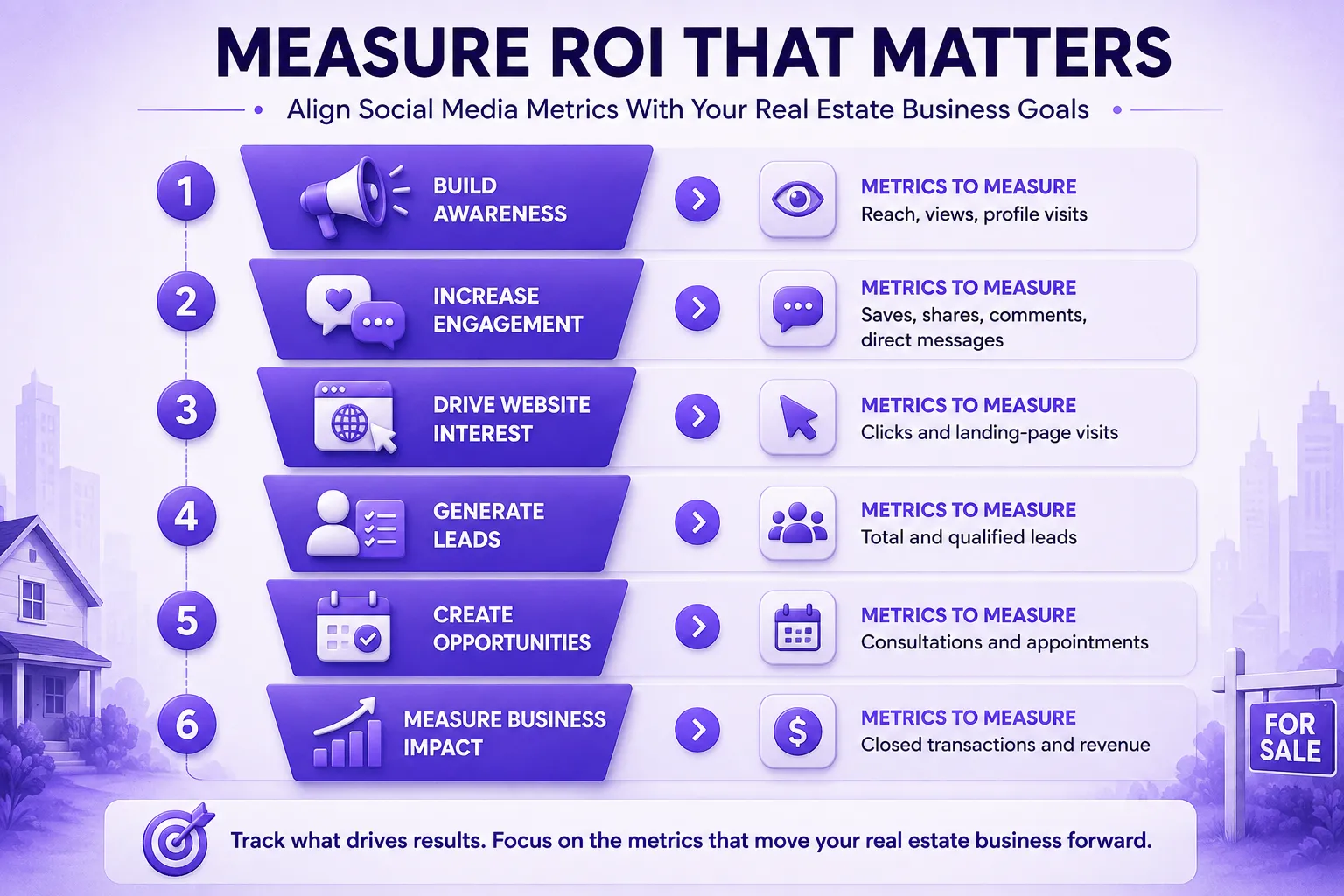
Follower growth and post likes can provide useful information, but they do not explain whether social media is contributing to business growth. Your measurement framework should reflect the original business objective.
| Business Objective | Metrics to Measure |
|---|---|
| Build awareness | Reach, views, profile visits |
| Increase engagement | Saves, shares, comments, direct messages |
| Drive website interest | Clicks and landing-page visits |
| Generate leads | Total and qualified leads |
| Create opportunities | Consultations and appointments |
| Measure business impact | Closed transactions and revenue |
What Should a 90-Day Social Media Strategy for Real Estate Look Like?
The first month should focus on audience research, profile optimization, business goals, platform selection, and content planning. Establish a baseline for your existing performance so that future improvements can be measured.
The second phase should focus on publishing consistently and testing different topics, hooks, formats, and calls to action. Look beyond basic engagement and identify which content is generating meaningful conversations and inquiries.
The final phase should focus on the strongest-performing content themes and conversion paths. Successful content can be repurposed into different formats, while selected high-performing topics can be tested through paid distribution where appropriate. By the end of the 90-day period, you should have a clearer understanding of which audiences, content types, platforms, and offers are contributing to your lead-generation goals.
See How UnoSearch Helped Sarayu Real Estate Generate More Rental Leads
Watch this client testimonial to see how UnoSearch helped Sarayu Real Estate improve its Google visibility, website performance, and targeted digital marketing campaigns resulting in more consistent inbound calls from renters and property owners.
How Can UnoSearch Support Your Real Estate Marketing Goals?
For US real estate businesses, social media works best when organic content, paid campaigns, and conversion strategies are aligned. UnoSearch helps real estate businesses in the US build a targeted social media strategy around local markets, property audiences, and buyer intent—connecting content and campaigns with measurable lead generation and business growth.
Not sure how social fits into your broader digital strategy?
Looking to scale high-performing campaigns with paid advertising?
Our Meta Ads Services can support targeted campaigns designed to reach relevant audiences, generate inquiries, and measure campaign performance.
Want to capture prospects actively searching for real estate services?
Need a broader paid acquisition strategy beyond social media?
Frequently Asked Questions
What is social media marketing for real estate?
It is the use of social platforms to build awareness, demonstrate expertise, promote properties, engage potential buyers and sellers, and generate qualified business opportunities.
Which social media platform is best for real estate agents?
The best platform depends on the audience and goal. Instagram and Facebook can support visual and local marketing, LinkedIn can be valuable for B2B and commercial relationships, TikTok can support discovery, and YouTube can build long-term searchable authority.
How often should a real estate agent post on social media?
Consistency matters more than copying a universal posting frequency. Choose a schedule your team can maintain while measuring whether the content generates relevant engagement and inquiries.
What should real estate agents post besides listings?
Useful options include neighborhood content, market updates, buyer and seller education, testimonials, client stories, behind-the-scenes work, local partnerships, and answers to frequently asked questions.
How can social media generate real estate leads?
Create useful content for a defined audience, add a relevant CTA, offer a clear next step such as a guide or consultation, capture the lead or conversation, and follow up through a structured nurture process.
References
1. REALTOR® Technology Survey
https://www.nar.realtor/research-and-statistics/research-reports/realtor-technology
2. Real Estate Social Media Marketing: Expert Tips for 2025 Success https://blog.hootsuite.com/real-estate-social-media
3. The 5 C’s for Making Powerful Marketing Videos
https://www.nar.realtor/news/real-estate-news/sales-marketing/the-5-cs-for-making-powerful-marketing-videos
Continue Learning About SEO & AI Search
Best Free SEO Courses For Beginners In 2026
Want to learn SEO without spending a rupee? These are the best free SEO courses for beginners in 2026, compared by length, certificate, and who each one suits, so you can pick the right starting point and actually finish it. By Pankaj Srivastava |...
What is SEO? A Beginner Guide To Understand
New to SEO and wondering what it actually means? This beginner guide explains what is SEO, how search engines find and rank pages, the four main types, and why it matters more than ever in 2026. No jargon, just clear answers.Table of...
What is included in SEO and GEO audit?
Published Date: June 2nd 2026See Where Your Brand Stands Across Search and AI Identify the gaps affecting your Google visibility and AI citations, with actionable insights to strengthen your presence across both traditional and AI...