
How to Improve Website Traffic: A Practical Guide to Growing Visitors in 2026
Putting in the effort but still not seeing your numbers move? Figuring out how to improve website traffic isn’t about one trick. It’s about fixing the right things in the right order. Here’s a practical, no-fluff breakdown of what actually increases visitors, how long it realistically takes, and where most sites quietly lose traffic without realizing it.
Looking for an SEO agency?
UnoSearch helps brands rank higher and drive real organic growth.
Get Free Proposal1. Quick Answer
2. Traffic Sources
3. Traffic Timeline
4. Core Strategies
5. Content Tactics
6. Technical Fixes
7. Paid vs Organic
8. Choosing a Strategy
9. Common Mistakes
10. How Unosearch Helps
11. FAQ

How UnoSearch Took A SaaS Company From Buried SERPs to 50%+ Organic Growth and ChatGPT & AI Overview Citations
Quick Answer
If you want the short version: the fastest way to increase website traffic is to fix technical issues that block visibility, publish content that matches real search intent, and build backlinks consistently over time. Paid traffic can boost numbers immediately, but organic growth the kind that keeps compounding without ongoing ad spend usually takes three to six months to show clearly.
There’s no single lever that will boost website traffic overnight. Sites that grow steadily are almost always doing several smaller things right at once, not one big thing perfectly.
Expert insight: According to Google Search Central’s own guidance, there are no shortcuts that instantly increase traffic sustainable growth comes from making content genuinely helpful and making it easy for search engines to understand and surface your pages.
Where Is Your Traffic Actually Coming From?
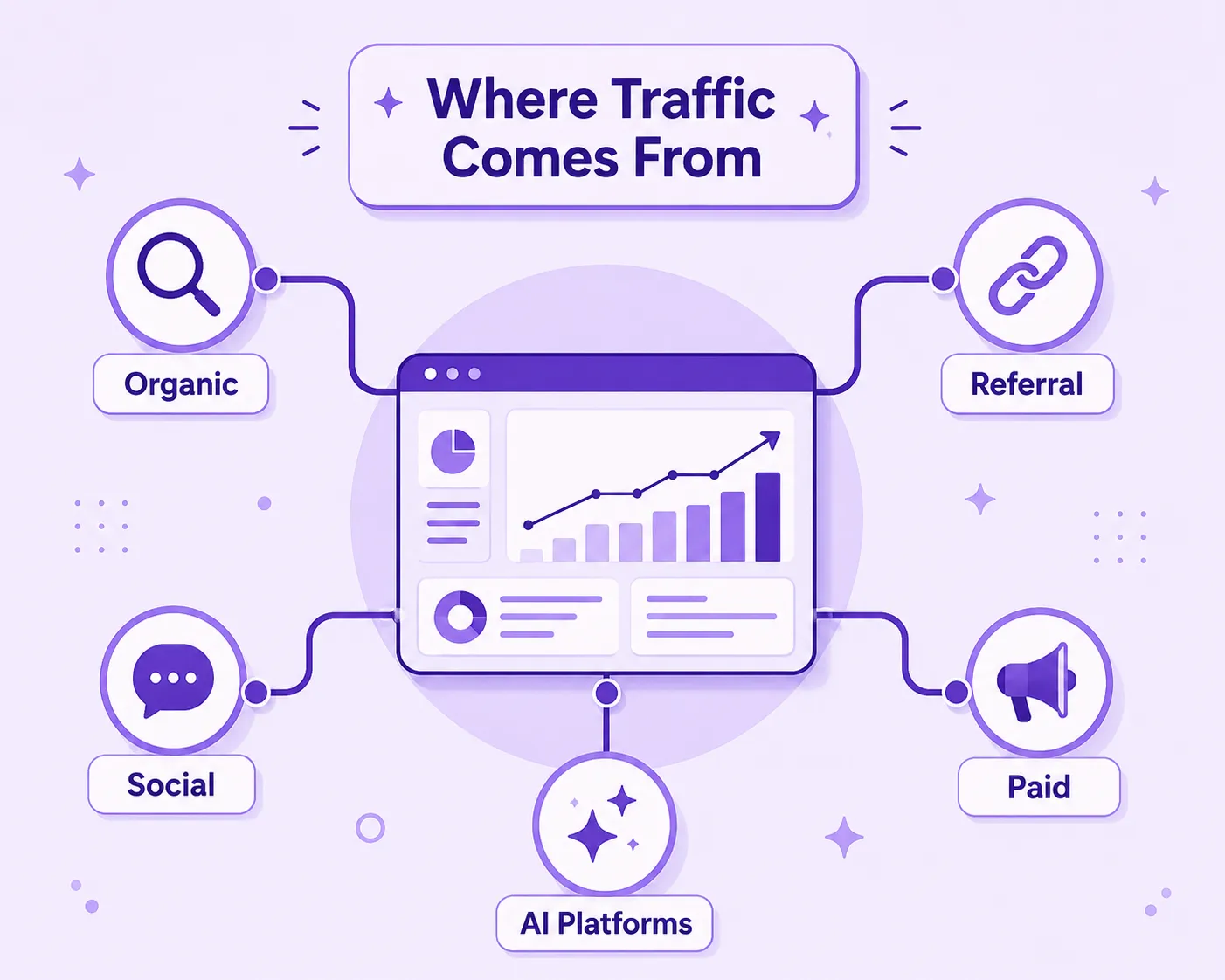
Before trying to increase website traffic, it helps to understand where visitors typically come from, since each source responds to different tactics.
| Traffic Source | What It Means | How to Grow It |
|---|---|---|
| Organic search | Visitors from unpaid Google/Bing results | SEO, content, technical fixes |
| Direct | Visitors typing your URL or using bookmarks | Brand awareness, repeat visits |
| Referral | Visitors clicking links from other websites | Backlink building, guest posts, partnerships |
| Social | Visitors from social media platforms | Consistent posting, shareable content |
| Paid | Visitors from ads (search, social, display) | Ad spend, targeting, creative testing |
| AI platforms | Visitors clicking through from ChatGPT, Gemini, Perplexity, or AI Overviews | Generative Engine Optimization (GEO), structured data, clear direct-answer content |
Most sites over-focus on one channel while ignoring the others. A healthy traffic strategy usually draws from at least three of these sources, so a dip in one (like a social algorithm change) doesn’t tank your overall numbers.
AI platforms are also the fastest-growing source on this list. As more people search directly inside ChatGPT, Gemini, and Google’s AI Overviews instead of typing into a traditional search bar, sites that are cited or linked inside those answers are starting to see a genuinely new stream of traffic one that barely existed a couple of years ago.
How Long Does It Take to See Increased Website Traffic?
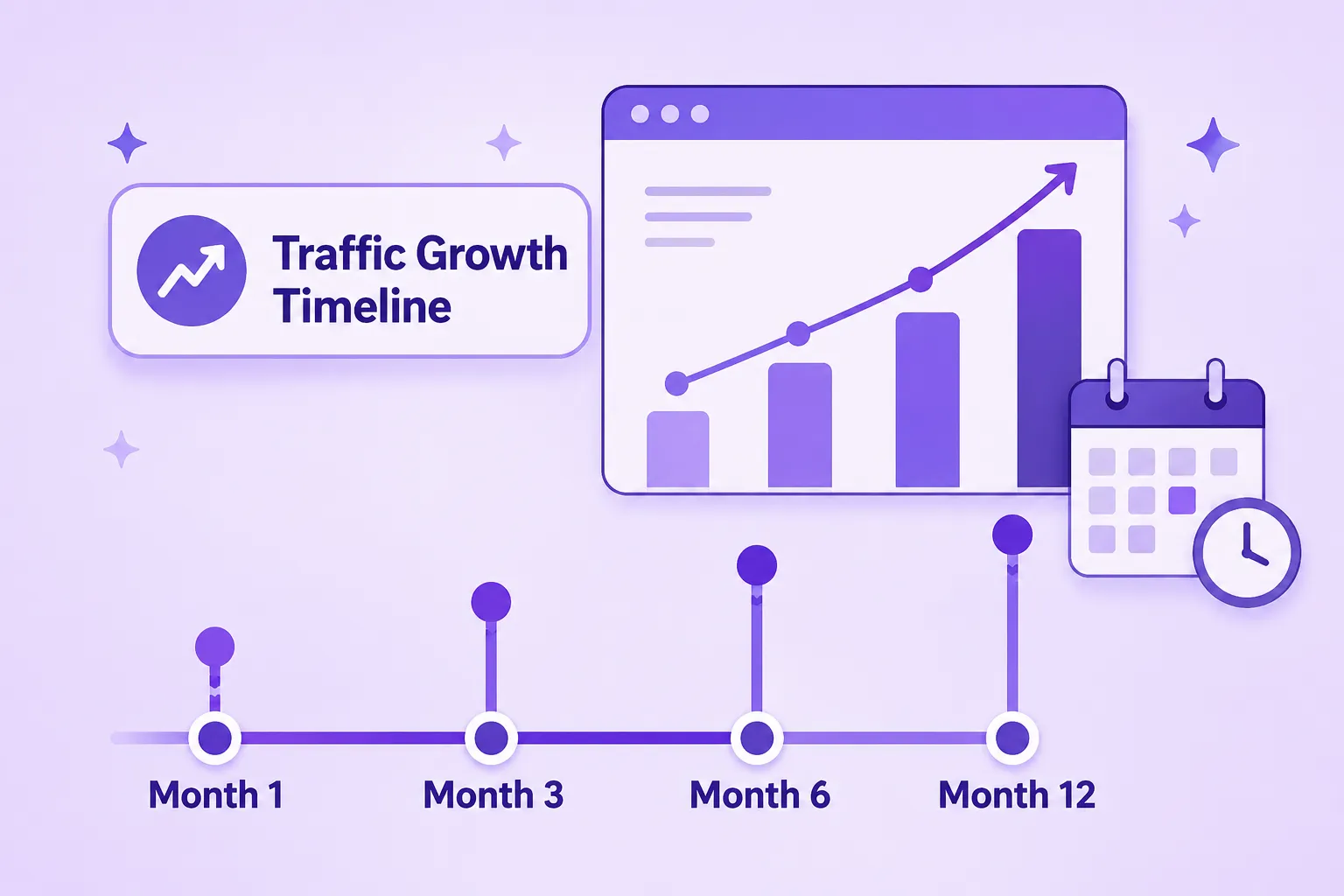
Here’s a realistic view of what improving website traffic actually looks like stage by stage.
| Stage | What Typically Happens |
|---|---|
| Weeks 1–4 | Technical audit completed, crawl/indexing issues fixed, priority pages optimized |
| Months 2–3 | Early impressions growth in Search Console, first ranking movement on easier keywords |
| Months 3–6 | Noticeable increase in organic visitors, content starts ranking for target terms |
| Months 6–12 | Compounding traffic growth as content library and backlinks build authority |
| Ongoing | Traffic continues to grow with consistent publishing and technical maintenance |
The biggest jump usually isn’t in month one it’s between months three and six, once Google has had time to fully re-crawl and trust the changes. This mirrors what we’ve seen when improving your Google ranking more broadly, since ranking and traffic growth are directly connected.
How to Increase Website Traffic: Core Strategies
If you’re wondering how to increase website traffic in a way that actually lasts, these are the fundamentals that consistently work:
Fix technical SEO issues first.
Broken links, slow load times, and indexing errors block traffic before content even has a chance to perform.
Target real search intent.
Ranking for the right keywords means matching what searchers are actually trying to accomplish, not just inserting popular terms.
Publish content consistently.
A steady stream of relevant, well-researched content builds topical authority over time.
Build quality backlinks.
A handful of links from genuinely relevant, credible sites does more for traffic than a large volume of low-quality ones.
Strengthen internal linking.
Help both users and search engines discover more of your site’s pages naturally.
Optimize for local search
If relevant. Many businesses miss significant nearby traffic simply because their local SEO signals are weak.
Getting these fundamentals right is also what drives long-term ranking improvement the two goals are really the same underlying work, just measured differently.
A few additional levers worth prioritizing:
Repurpose high-performing content.
Turn a strong-performing blog post into a video, infographic, or social snippet to capture traffic from multiple formats and platforms.
Answer questions your audience is actually asking.
Use tools like Google’s “People Also Ask” or Search Console query data to find real, unmet search intent.
Build topic authority, not just isolated pages.
Google increasingly rewards sites that demonstrate depth across a subject area, not just one well-optimized page.
Don't neglect branded search
As awareness grows, more people will search for your business name directly make sure that experience is just as strong as your discovery-stage content.
How to Increase Visitors on Your Website Through Content
Content is one of the most reliable ways to increase visitors on website pages over time, but only when it’s built around what people are actually searching for.
Answer the exact question being searched
Clearly and early in the page, rather than burying the answer under unnecessary introduction.
Cover topics in genuine depth
Thin content rarely competes against pages that fully address a searcher’s question.
Update older content regularly
Refreshing outdated statistics, examples, or sections can recover lost rankings and traffic without writing anything new.
Use clear headers and structure.
This helps both readers scan your content and search engines (and increasingly, AI answer engines) understand it.
Build content clusters
Group related content together with internal links, so authority on a topic builds across multiple pages rather than being spread thin.
Content built this way doesn’t just increase visitors on website pages temporarily it keeps attracting traffic long after publishing, unlike a one-time paid campaign.
Content formats worth testing beyond blog posts:
Comparison and "vs" style pages
Which capture visitors actively deciding between options
Original data or research
which naturally attracts backlinks and citations from other sites
How-to guides with visuals or step-by-step structure
Which tend to earn longer time-on-page
FAQ-style pages or sections
Which align well with how people phrase questions in both search engines and AI tools
Diversifying content formats also protects you from relying too heavily on one type of page ranking well if algorithms shift, a varied content library is more resilient than a single content type.
How to Boost Website Traffic With Technical & On-Page Fixes
Even great content won’t perform if technical issues are quietly blocking visibility. These are the fixes that consistently boost website traffic once addressed:
Page speed and Core Web Vitals
Slow-loading pages lose both rankings and visitors before they even finish reading.
Mobile usability
Most search traffic today comes from mobile devices, and a poor mobile experience directly hurts rankings.
Crawlability and indexing
If Google can’t crawl or index a page properly, it simply won’t show up in search results at all.
Title tags and meta descriptions
Small on-page changes that directly affect click-through rates from search results.
Structured data (schema)
Helps search engines and AI systems understand your content more precisely, improving visibility in both.
Technical fixes often produce the fastest visible results of any traffic strategy, since they remove barriers that were silently limiting visibility all along.
Other technical factors worth auditing:
Duplicate content
Confuses search engines about which version of a page to rank, splitting authority across near-identical pages
Broken internal links
Waste crawl budget and create dead ends for both users and search bots
XML sitemap accuracy
An outdated sitemap can prevent new pages from being discovered and indexed promptly
HTTPS and site security
A lack of SSL can hurt both rankings and user trust, increasing bounce rates
Redirect chains
Multiple redirects in sequence slow down page load and dilute link equity
A technical audit doesn’t need to happen constantly, but revisiting it every few months catches issues before they quietly erode traffic over time.
Paid vs Organic: Fastest Ways to Increase Web Traffic
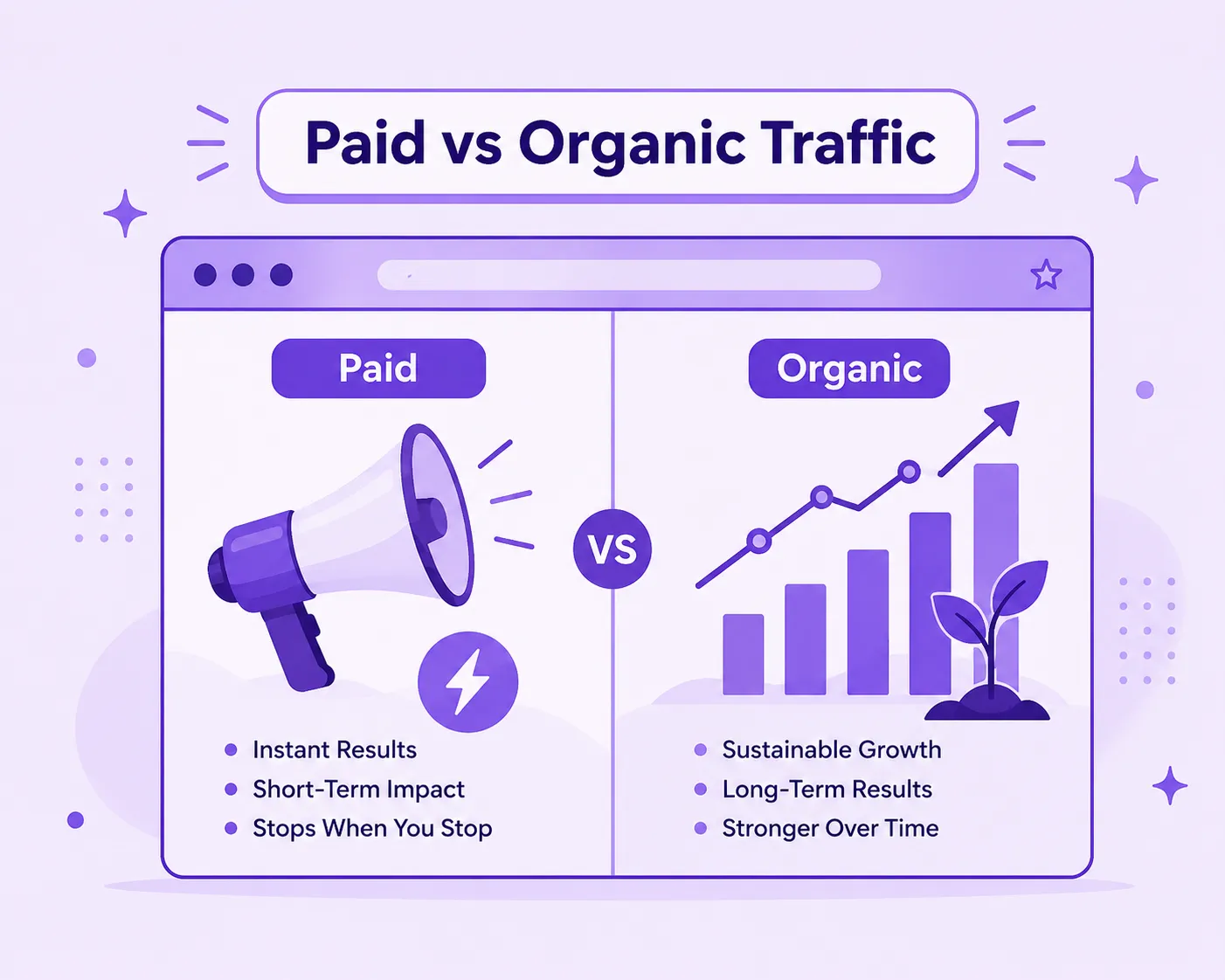
If you need traffic quickly, paid advertising can increase web traffic almost immediately — but it stops the moment you stop paying. Organic strategies take longer to build but keep compounding without ongoing spend.
| Approach | Speed | Longevity | Best For |
|---|---|---|---|
| Paid ads (PPC, social) | Immediate | Stops when spend stops | Quick traffic, testing offers, short-term campaigns |
| Organic SEO & content | Slower (3–6 months) | Compounds over time | Sustainable, long-term traffic growth |
| Backlink building | Gradual | Long-term authority gains | Supporting both rankings and referral traffic |
| Social media | Fast, variable | Depends on platform algorithm | Brand awareness, driving initial traffic |
Most businesses that grow steadily use both paid traffic to fill short-term gaps, and organic growth as the long-term foundation that doesn’t disappear when the budget does.
How Do I Know Which Traffic Strategy to Prioritize?
With so many levers available, prioritization usually comes down to three questions:
1. How urgently do you need results?
If you need traffic within days, paid campaigns or a strong social push make sense as a bridge while organic strategies build momentum in the background.
2. Where is your current traffic weakest?
A site with strong content but poor technical health should prioritize fixes first no amount of great content overcomes a site Google can’t properly crawl. A technically healthy site with thin content should prioritize content depth instead.
3. What does your audience actually do before converting?
If your customers research extensively before buying, content and organic search matter more. If purchases are more impulsive, paid and social channels may drive more immediate volume.
There’s rarely a universal “right” priority it depends on where your specific site is weakest and how quickly you need results to show up.
Common Mistakes That Are Quietly Killing Your Traffic
Many sites plateau or lose traffic without realizing exactly why. These are the most common culprits:
| Common Mistake | Why It Hurts Traffic | The Fix |
|---|---|---|
| Ignoring technical SEO | Crawl and indexing issues block visibility before content matters | Run regular technical audits |
| Publishing thin content | Doesn't fully satisfy search intent, gets outranked easily | Rewrite with real depth and originality |
| Inconsistent publishing | Stalls momentum and topical authority | Maintain a steady content schedule |
| Neglecting older content | Rankings and traffic quietly decay over time | Refresh and update existing pages regularly |
| No mobile optimization | Hurts both rankings and user experience directly | Test and fix mobile usability regularly |
| Relying only on paid traffic | Traffic disappears the moment spend stops | Build organic strategies alongside paid campaigns |
How Unosearch Can Help You Increase Website Traffic
If you’ve read through everything above and you’re thinking, “this is a lot to manage consistently,” you’re not wrong increasing website traffic takes technical fixes, content strategy, and link building working together, month after month. That’s exactly where Unosearch comes in.
Not sure how to increase website traffic sustainably?
A revenue-driven SEO strategy ties your traffic growth directly to real business outcomes, not just visitor counts.
Want more visitors from nearby customers specifically?
Local SEO services help you capture local search demand that general SEO efforts often miss.
Want your traffic strategy to work in AI-generated answers too?
GEO services make sure your content gets cited inside ChatGPT, Gemini, and AI Overviews, not just ranked on a results page.
If you’re weighing where to invest organic growth, paid campaigns, or a mix of both our breakdown of traditional vs digital marketing is a useful next read. And if you want a realistic sense of how long results take, how long SEO takes to show results covers that in detail.
Instead of piecing together fixes on your own, Unosearch handles the full picture technical health, content, and authority-building so your traffic growth is steady, measurable, and built to last.
Unosearch helps businesses move from traditional, hard-to-measure marketing spend into digital strategies that show clear, trackable returns without losing what traditional marketing does well for the audiences that still need it.
Frequently Asked Questions
How do I increase website traffic quickly?
Paid advertising (PPC or social ads) is the fastest way to increase web traffic immediately, but it stops once spend stops. For traffic that lasts, technical fixes and intent-matched content build a stronger long-term foundation.
How long does it take to increase website traffic?
Early signals typically appear in one to two months, with meaningful traffic growth in three to six months, and compounding results building through six to twelve months of consistent effort.
What is the best way to boost website traffic long-term?
A combination of technical SEO health, content built around real search intent, and steady backlink building produces the most durable, compounding traffic growth.
Why isn't my website traffic increasing?
Common causes include unresolved technical issues, thin or outdated content, inconsistent publishing, and relying solely on paid traffic without an organic strategy behind it.
Does social media help increase visitors on a website?
Yes, social media can drive quick traffic and brand awareness, but it’s typically less durable than organic search traffic since it depends heavily on platform algorithms and ongoing activity.
Which traffic source should I focus on first?
It depends on your site’s current weak point. If technical issues are unresolved, fix those first regardless of channel. Otherwise, prioritize organic search for long-term growth and paid or social channels if you need faster, short-term results.
References
1. Google Search Central SEO Starter Guide
https://developers.google.com/search/docs/fundamentals/seo-starter-guide
2. Google Search Console (official)
https://search.google.com/search-console/about
3. HubSpot Website Traffic & Marketing Statistics
https://www.hubspot.com/marketing-statistics
Continue Learning About Digital Marketing

Social Media Marketing for E-Commerce: From Reach to Revenue
Posting product photos and hoping for sales is not a strategy. Social media marketing for e-commerce works when you build it the same way you build any other growth channel: with a clear budget, the right platforms, and numbers you can actually measure. This guide...

PPC for E-Commerce: A Profit-First Guide to Paid Ads That Pay Off
Every click on your ad costs money. So the goal is not more clicks. The goal is clicks that turn into profit. PPC for e-commerce puts your products in front of shoppers who are ready to buy. Done well, e-commerce pay per click brings fast, measurable sales. Done...
SEO for Lawyers: How to Get Found by Clients on Google
SEO for lawyers is the practice of improving your website so your firm can appear when people search Google for legal help. Most people looking for legal assistance begin their search online, and firms that appear prominently in those results are more likely to...